
The short answer is one word: it depends. Not on the temperature displayed by your weather app, but on the perceived temperature on the skin, which takes into account wind, humidity, and sunlight. A thermometer reading 20 °C under a cloudy sky with wind is nothing like 20 °C in full sun without a breath of air. It is this distinction that separates comfort from chill.
Perceived temperature vs displayed temperature: the deciding factor for wearing shorts
We recommend consistently thinking in terms of perceived temperature. Direct solar radiation can add several degrees to skin perception, while a moderate wind can significantly lower that same value. For example, at 12 °C with no wind and in full sun, the perceived temperature on exposed skin can rise to around 16-18 °C. Add a strong wind, and that same 12 °C drops to around 7 °C of perceived temperature.
Most weather apps now display a “feels like” index. This is the value you should check to know what temperature to wear shorts, not the raw thermometer reading.
Below 15 °C of perceived temperature, shorts become uncomfortable for most people engaged in moderate activity (walking, city runs). Above 18-20 °C of perceived temperature, shorts are suitable for almost everyone, even when sitting for extended periods.
The trap of humidity
Relative humidity plays an underestimated role. Humid air conducts body heat better than dry air. At 16 °C with a high humidity level, you will feel colder in shorts than at 14 °C in dry, sunny air. Coastal areas or misty mornings regularly trap those who rely solely on the thermometer.
Shorts and physical activity: very different thresholds depending on effort
Temperature charts are worthless without considering the level of activity. A runner generates much more metabolic heat than a spectator sitting at a café terrace. Athletics federations and trail clubs confirm: in running, shorts become relevant from 8-10 °C if the effort is sustained.
The principle is simple: you dress to feel slightly cold at the start. After a few minutes of effort, heat production compensates significantly. Below about 5 °C, long tights are still recommended even for trained runners. Between 5 and 10 °C, shorts are suitable for regular practitioners. Above 10-12 °C, it is the norm for almost all athletes.
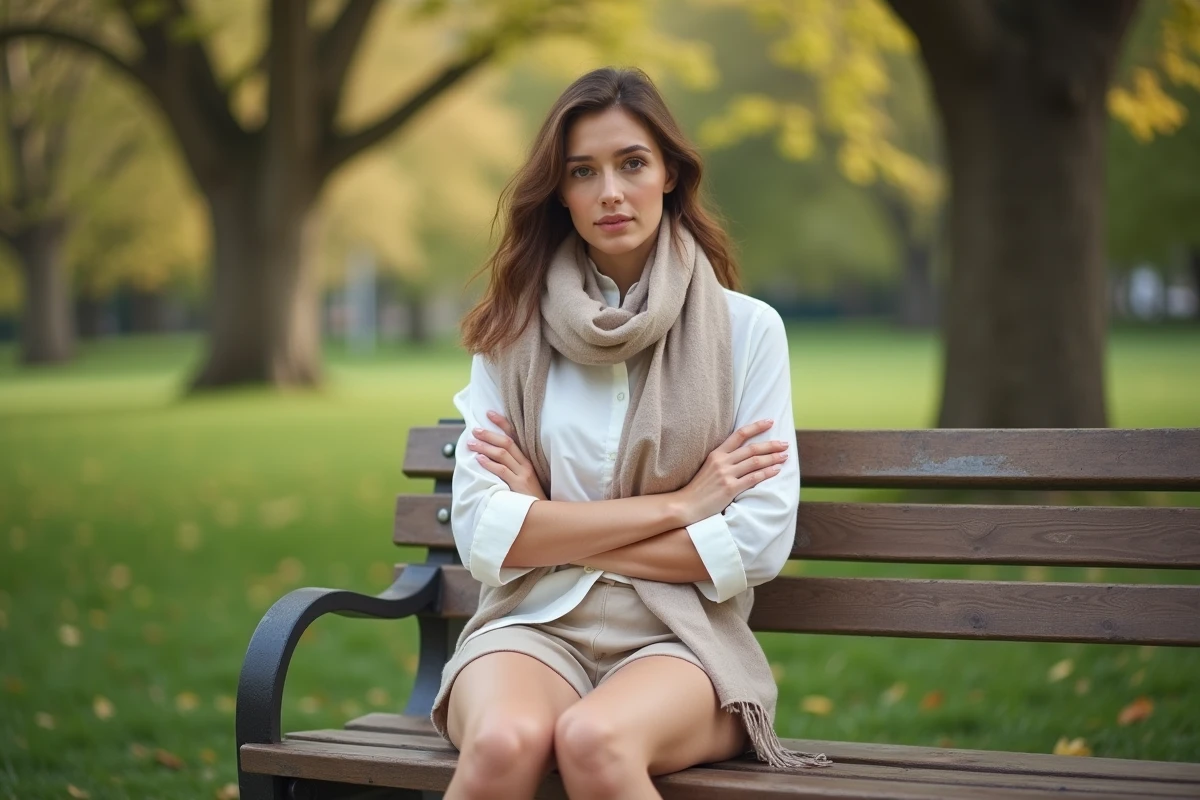
For sedentary activities (café terrace, picnic, waiting at a bus stop), we observe that the comfort threshold rises significantly. Count on at least 20 °C of perceived temperature to stay in shorts without moving for more than half an hour.
Children and shorts: ignored pediatric recommendations
Fashion and weather articles almost systematically overlook a sensitive audience: young children. Recent pediatric recommendations emphasize a specific point: prolonged bare legs are not recommended below 18-20 °C for immobile toddlers (stroller, playground).
The reason is physiological. Young children regulate their body temperature less effectively than adults. A child who “says they are not cold” is not a reliable indicator, as the perception of cold develops gradually. The risk of cooling and upper respiratory infections increases when legs remain exposed without active movement.
These recommendations are framed in terms of clothing layers and activity level, not in fixed temperature. A child running in the park at 15 °C can perfectly wear shorts. The same child immobile in a stroller at the same temperature needs pants.
Practical guidelines by age group
- Under 2 years: prefer lightweight pants below 20 °C of perceived temperature, except for intense motor activity
- Between 2 and 6 years: shorts are suitable above 18 °C if the child is moving; otherwise, plan for pants or a blanket during quiet times
- Over 6 years: guidelines are closer to those for adults, keeping an extra layer handy

Shorts at work: what labor law says in France
The Labor Code does not mention any explicit prohibition of shorts. However, an employer can impose dress restrictions if justified by the nature of the task or by safety and hygiene imperatives. In practice, case law distinguishes two situations.
- Positions in contact with customers: the employer can require “appropriate” or “professional” attire and consider shorts incompatible with this requirement. The restriction must be included in the internal regulations or memo
- Positions without customer contact and without safety risks: banning shorts becomes harder to justify legally, especially during hot weather
- Construction sites and industrial sites: long pants are often mandated by personal protective equipment rules, regardless of temperature. Wearing shorts there exposes one to disciplinary sanctions
During heatwaves, the employer’s obligation to protect employees’ health may conflict with dress restrictions. No text requires allowing shorts, but refusing any dress adaptation during extreme heat weakens the company’s position in case of disputes.
Choosing your shorts according to conditions: materials and cut
Thermal comfort in shorts does not solely depend on the outside temperature. The fabric of the garment plays a direct role. Natural fibers like linen or lightweight cotton promote sweat evaporation and remain pleasant even at high temperatures. Technical synthetic materials (polyester, polyamide) dry faster and are better suited for sports effort.
A knee-length linen short remains the most versatile choice for urban use between 20 and 30 °C. For sports, a technical short with a sufficiently dense weight protects against wind while wicking moisture away. Thick denim shorts should be avoided in extreme heat: they retain sweat and become uncomfortable quickly.
The cut also matters. A short that is too tight limits air circulation between the skin and the fabric, reducing the cooling effect. A mid-thigh or just above the knee short, slightly loose, offers the best compromise between sun protection and ventilation.
The threshold for wearing shorts is therefore not a single number. It is a combination of perceived temperature, activity level, profile (adult or child), and context (leisure, sport, work). Aiming for 18-20 °C of perceived temperature for daily use remains the most reliable guideline for most situations.