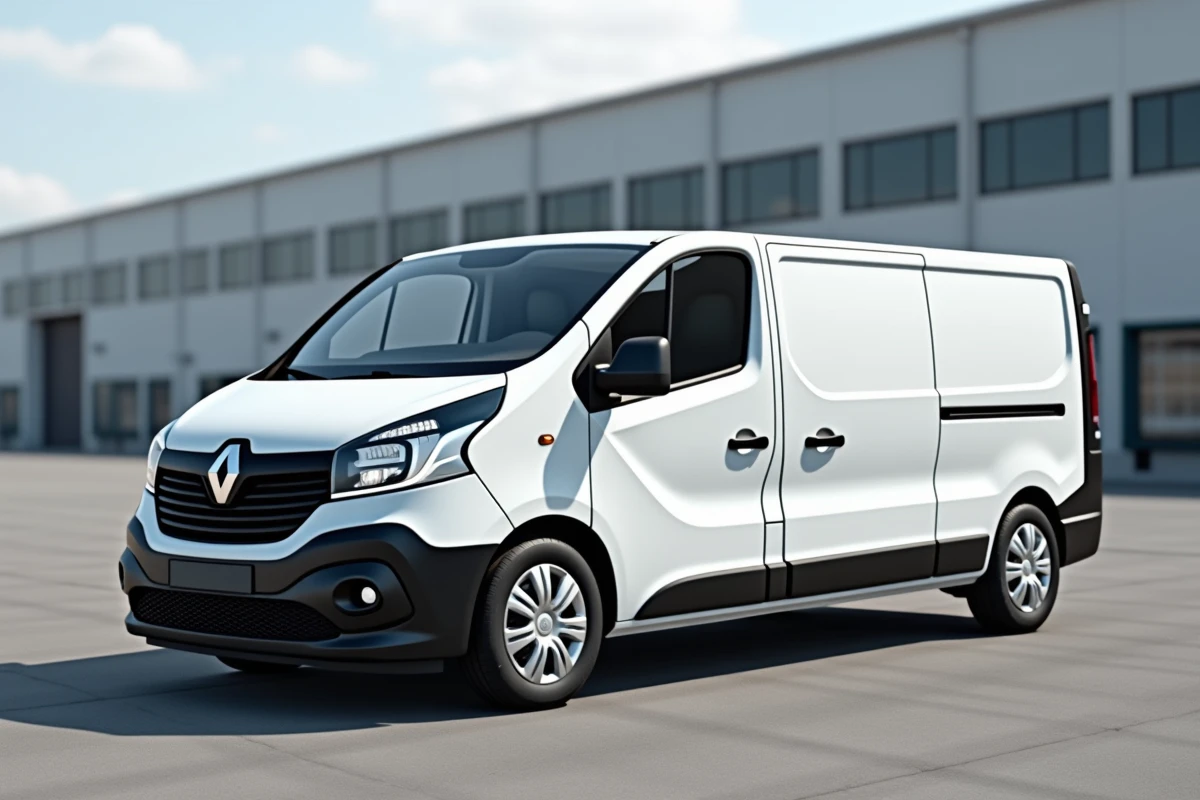
The Renault Trafic L2H1 remains the reference van for conversion projects in France. Its intermediate size, between the small utility vehicle and the large van like the Master, attracts both vanlife enthusiasts and artisans looking for a modular vehicle. To transform this space into a living area or a mobile workshop, every centimeter counts, and the manufacturer’s official dimensions are the starting point for any serious project.
Interior Height of the Trafic L2H1: The Constraint That Shapes the Entire Plan
Most guides start with length. This is a prioritization error. On a Trafic L2H1, the useful height of 1,387 mm dictates the entire layout. With less than one meter forty under the ceiling, no one can stand up. This parameter influences the choice of furniture, the position of the bed, and the type of kitchen that can be considered.
Specifically, this height requires prioritizing low furniture, sliding drawers instead of vertical cabinets, and a sleeping area that does not require sitting up to be comfortable. Ceiling insulation also eats up a few centimeters: depending on the thickness of the chosen material (cork, wood wool, Armaflex), one must account for a height loss that further reduces the available margin.
To properly understand the dimensions of the Renault Trafic L2H1, one must think in terms of net height after insulation, not in raw manufacturer dimensions. A layout plan that ignores this distinction risks creating a space where upper storage becomes unusable.
Useful Volume of the Trafic L2H1: What 7.75 m³ Really Allows
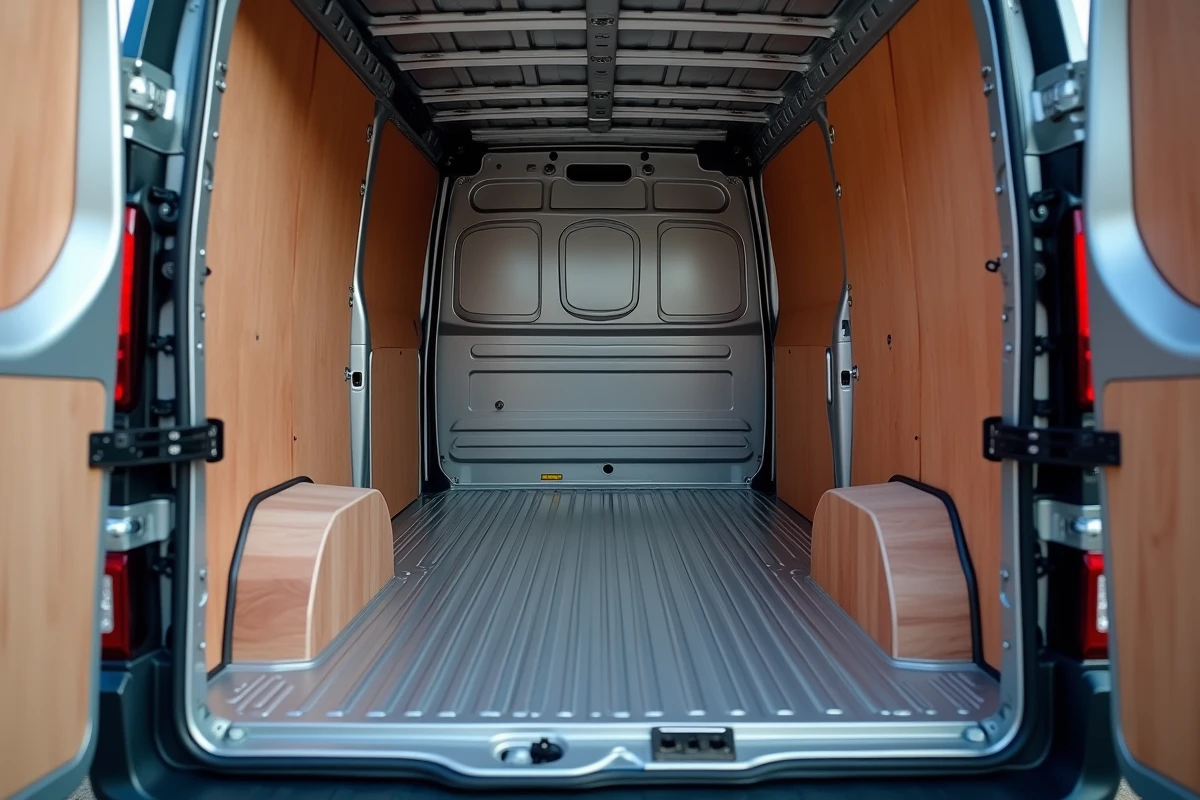
The Trafic Van L2H1 boasts a maximum useful volume of 7.75 m³. In comparison, the L1H1 version caps at 5.8 m³. This difference of nearly two cubic meters changes the very nature of the feasible project.
With 5.8 m³, a fixed bed occupies almost the entire space and leaves room only for a minimalist layout. With 7.75 m³, it becomes possible to simultaneously integrate a fixed bed, a compact kitchen, and side storage without the van resembling a cluttered corridor.
Key Loading Dimensions
The useful length reaches 2,937 mm, or nearly three meters. The useful width is 1,662 mm. These two combined dimensions allow for the installation of a transverse bed for one person, or a longitudinal bed for two people if one accepts a slight offset of the feet into a technical compartment.
- Useful length of 2,937 mm: sufficient for a 1.90 m longitudinal bed with a kitchen unit at the foot of the bed
- Useful width of 1,662 mm: compatible with a comb bed or a transverse bed for one person (average size)
- Useful height of 1,387 mm: requires a low layout, with drawers and storage under the bench
These dimensions come from the manufacturer’s sheet for the current generation (launched in 2014 and regularly updated). Field feedback varies on this point, as some dealer sheets still cite dimensions from older generations, sometimes with discrepancies of several centimeters.
Bed and Kitchen Layout in a Trafic L2H1: Concrete Trade-offs
The question of a fixed or foldable bed is the first trade-off. A fixed bed of 1.90 m long consumes about two-thirds of the useful length. This leaves just over one linear meter for the kitchen, the technical corner (battery, water tank), and access to the rear doors.
A foldable bed frees up daytime space but complicates the vehicle’s autonomy. It must be folded, stored, and then redeployed each evening. For daily vanlife use, the fatigue associated with this manipulation is a factor that many underestimate at the design stage.
The Compromise of Kitchen in a Constrained Space
With the limited height of the L2H1, kitchen units are generally installed on the side, at the height of the sliding side door. This position allows for cooking with the door open, which partially compensates for the lack of interior height. The work surface is then at a comfortable height when standing outside.
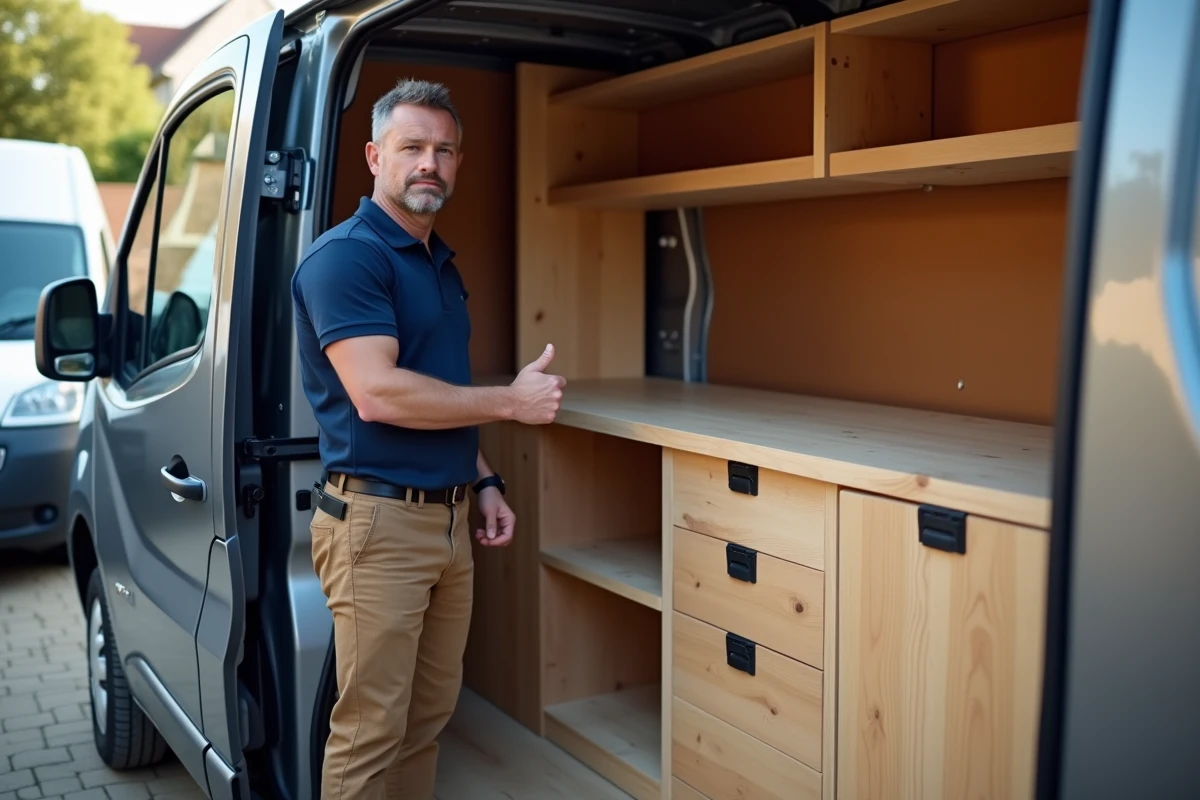
The relatively straight walls of the Trafic facilitate the attachment of battens and the installation of furniture panels. This is an advantage compared to some competitors with rounder shapes, where each element must be custom cut.
Extended Cabin and Space Loss: A Common Trap on the Trafic L2H1
The addition of a second row of seats (so-called “extended cabin” configuration) radically changes the data. In this type of variant, the loading length drops to 1,819 mm at 400 mm from the floor. You lose more than one meter of useful length compared to the standard van version.
For a conversion project, this configuration is a shaky compromise. The remaining space is barely enough for an auxiliary bed, and installing a fixed kitchen becomes almost impossible. The available data does not allow for concluding that a complete layout (bed, kitchen, storage) is feasible on an extended cabin L2H1 without major sacrifices.
Before purchasing a used Trafic L2H1 for a van project, always check whether it is a van or extended cabin version. The difference in useful length between the two is too significant to be compensated for by layout tricks.
Renault Trafic L2H1 and Autonomy: Weight as a Hidden Variable
Each element of the layout adds weight. Insulation, plywood furniture, water tank, auxiliary battery, bed: the total can represent several hundred kilos. The useful load of the Trafic L2H1 must be verified before finalizing a plan, as exceeding the GVWR exposes one to penalties in case of inspection and mechanical risks (braking, suspension, consumption).
The choice of layout materials (poplar instead of standard plywood, Armaflex instead of rock wool) directly influences this weight balance. A difference of a few dozen kilos on each item quickly adds up on a vehicle whose load margin is not extensible.
The Trafic L2H1 offers a generous volume for its category, but its interior height remains the main constraint. Any successful conversion project on this van begins by accepting this limit and designing around it, not against it.