You just ordered a plant online and are wondering how it will survive the journey in a box. Home delivery of plants relies on specific logistical choices, both from the seller’s and buyer’s sides. Understanding these choices helps avoid disappointment when opening the package and gives the plant the best chance of recovery.
Check that the carrier accepts live plants
Before even confirming an order, a commonly overlooked reflex is to ensure that the carrier chosen by the seller handles plants. Some transport companies exclude plants from their accepted goods or impose specific conditions depending on the route and mode of delivery.
If you are ordering from a foreign shop, this question becomes even more pressing. A postal package is not exempt from phytosanitary regulations simply because it is a small order. For a plant shipped from a non-European Union country, a phytosanitary certificate is generally required, even for simple cuttings intended to be planted.
In the case of a remote purchase from a seller located in another EU country, check for the presence of a phytosanitary passport. The exception that sometimes exempts this document for direct sales to the end user does not apply to online orders. To organize a home delivery of plants under the best conditions, these regulatory checks are a necessary prerequisite.
Packaging and protection of plants during transport
You may have already received a package where the plant was soaking in damp soil, the pot in pieces. This scenario almost always results from inadequate packaging. Specialized sellers use methods very different from generalist shops.
Shipping bare roots or in clumps
Several online sellers choose to ship their plants without pots, with roots wrapped in damp sphagnum and kraft paper. This method reduces the weight of the package, limits the risk of breakage, and maintains root hydration during transit.
Less weight also means reduced shipping costs. The more compact package often fits in a mailbox, avoiding the wait for a delivery person. In return, you will need to repot the plant as soon as you receive it.
Bracing and protective materials
For plants shipped in pots, the bracing inside the box makes all the difference. The elements to watch for when reading a seller’s listing:
- A system to secure the pot in the box (cut cardboard wedge, crumpled paper, foam) to prevent any movement during transport
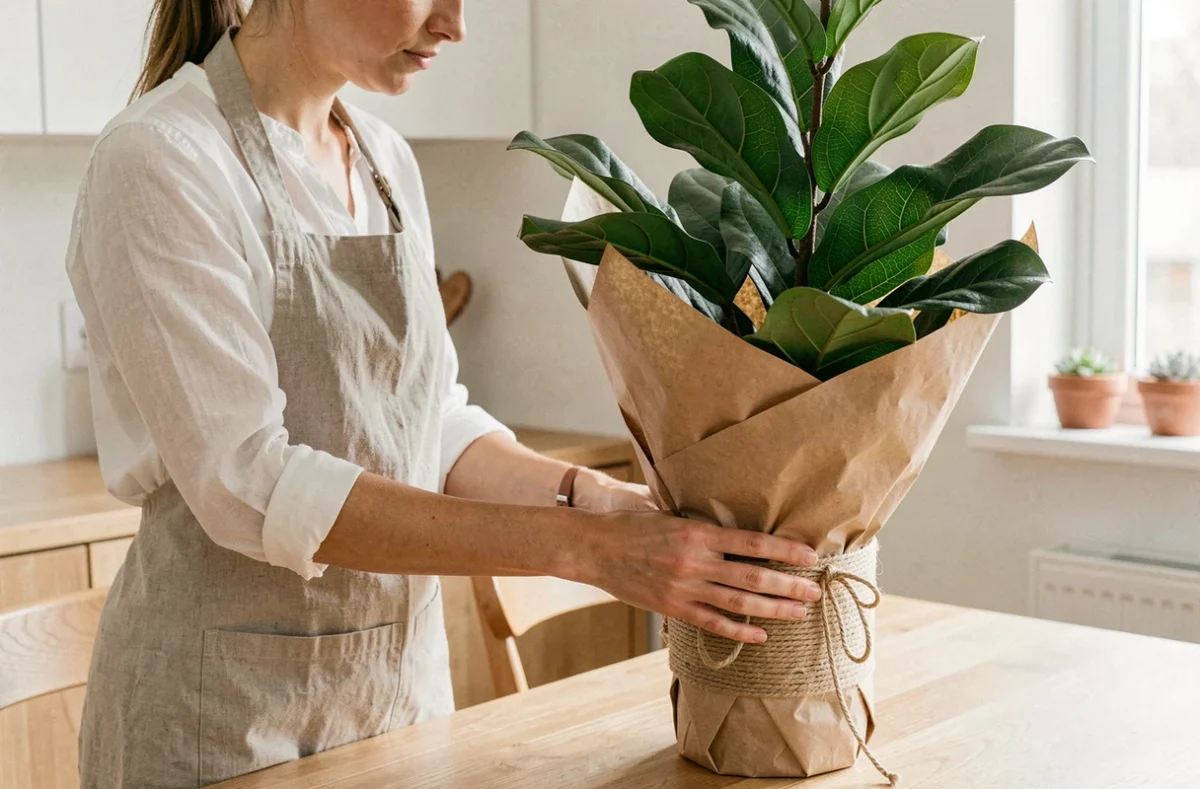
- A protective covering for the foliage with a paper sleeve or soft netting, which limits stem breakage without suffocating the plant
- An outer packaging that is sufficiently rigid to withstand successive handling in the sorting center
A compostable or recyclable packaging is an additional indicator of the seller’s seriousness. Zero plastic in plant packaging is no longer an exception.
Receiving the package: distinguishing transport stress from real damage
The moment you open the box is often a source of concern. A few yellowed leaves, a slightly drooping stem: should you be alarmed?
A slight droop after several days in a box is normal. The plant traveled in darkness, sometimes without water. This transport stress usually resolves within a few days if you act correctly upon receipt.
On the other hand, certain signs indicate serious damage: soft and translucent tissues on the stems, a rotten smell at the roots, or a completely dried substrate with brittle roots. In these cases, contact the seller quickly; most offer a transport guarantee if reported within a few business days.
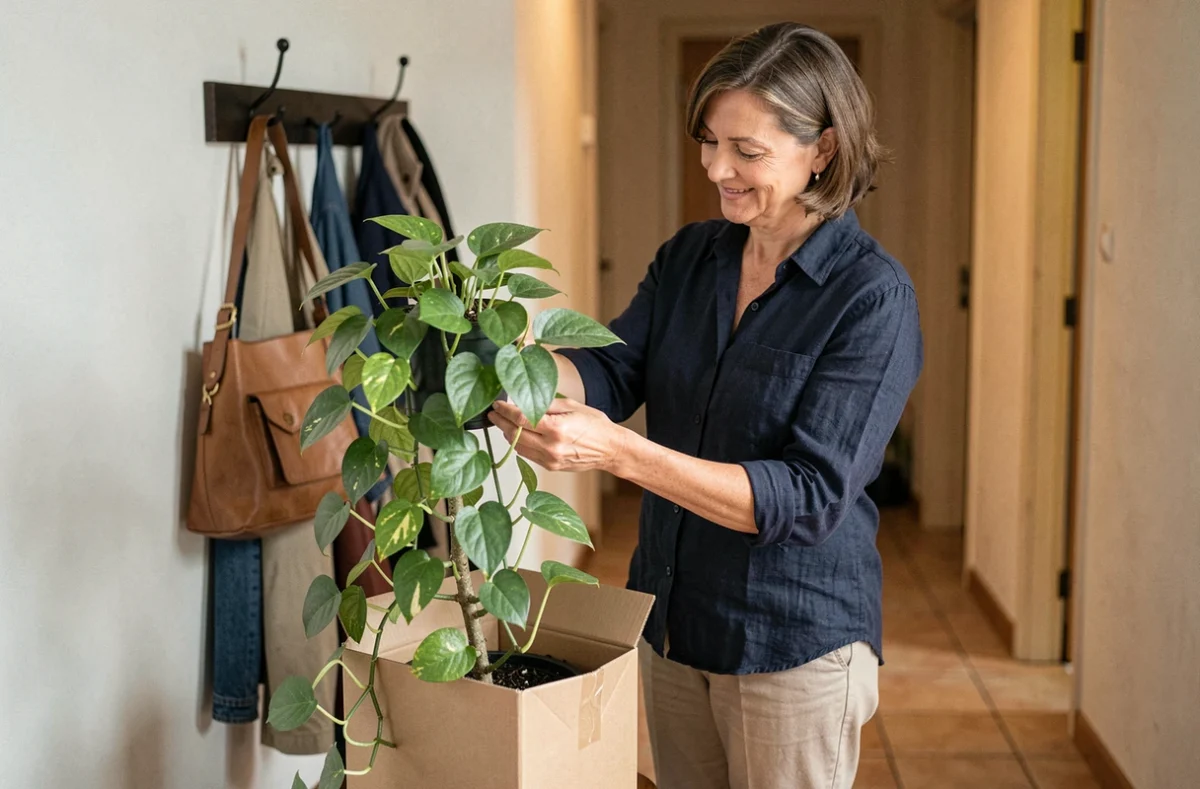
Immediate care actions after delivery
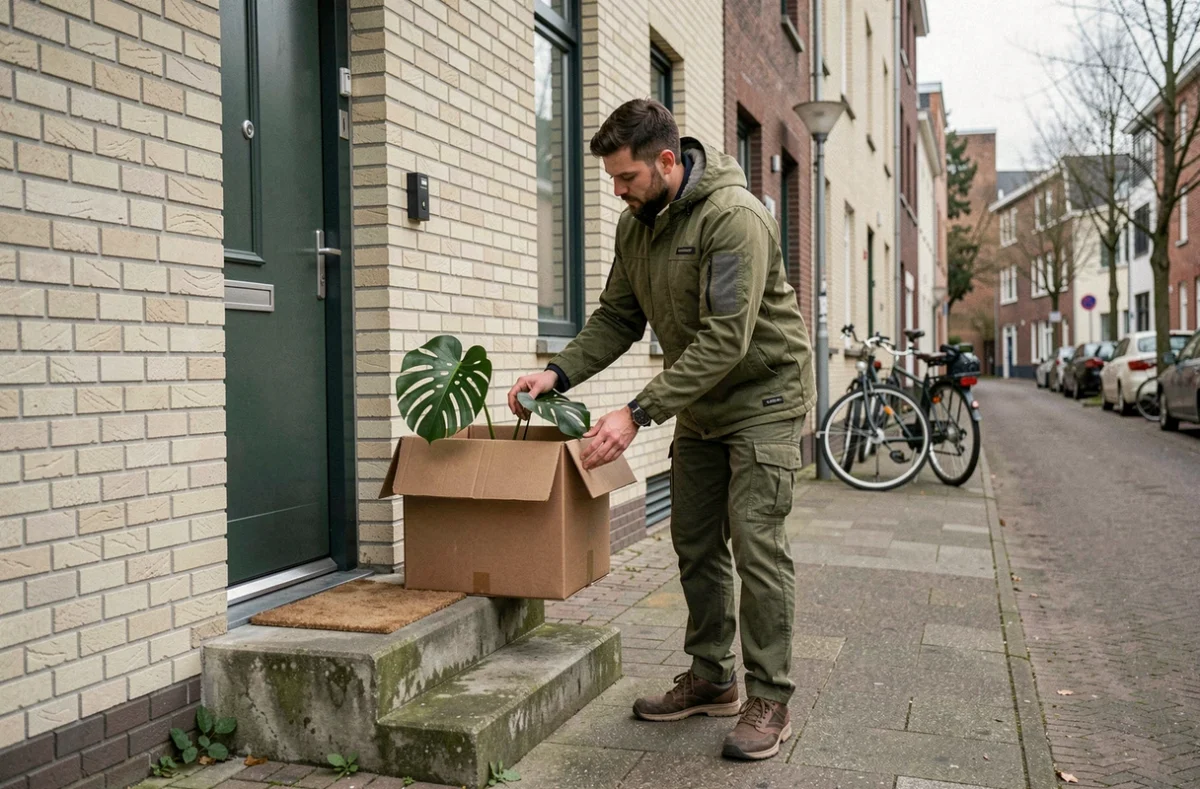
The first hours after receipt are crucial for the plant’s recovery. Have you ever noticed that a plant placed directly in full sun after a journey in a box wilts even faster? This is a reflex to avoid.
Gradual acclimatization to light
Place the plant in a bright spot but out of direct sunlight for two to three days. This acclimatization phase prevents light shock that would add to the transport stress. Only then should you install it in its permanent location.
Repotting and first watering
If the plant arrived bare-rooted, repotting cannot wait. Use a potting mix suitable for the type of plant (potting soil for houseplants, draining substrate for succulents, specific mix for orchids). Here are the steps in order:
- Gently untangle the roots if they are compacted and remove the transport sphagnum
- Choose a pot with a drainage hole, slightly wider than the root ball
- Water moderately after repotting, without soaking the substrate, then wait for the surface to dry before the next watering
- Do not fertilize during the first two weeks, allowing the roots to settle into their new substrate
For a plant delivered in a pot, a light watering is sufficient if the substrate is dry to the touch. Avoid repotting a plant delivered in a pot immediately: the double stress (transport plus repotting) can compromise recovery.
Delivery of plants during cold or heat waves
The shipping season radically changes transport conditions. In winter, a tropical plant can suffer irreversible damage if it stays several hours in an unheated truck or in a mailbox exposed to frost.
Serious sellers offer suitable options: insulated packaging with a heating pouch in winter, shipping at the beginning of the week to avoid a weekend in the warehouse. Scheduling delivery on a day when you are present remains the best way to limit exposure time to extreme temperatures.
During periods of intense heat, the risk is the opposite: rapid dehydration and overheating in the box. Prefer express delivery and open the package as soon as you receive it to ventilate the plant.
Ultimately, the success of a plant delivery depends on three links: a seller who packs properly, a carrier suitable for live plants, and a recipient who knows what to do upon opening the box. If any of these links is missing, the plant pays the price.