
On a a renovation site on the ground floor, the installer discovers that the threshold of the PVC sliding door blocks the passage of a wheelchair. The frame is too high, the accessibility standards are not met, and the quote needs to be revised. This type of situation, common in 2025, is expected to change with the new announcements for custom PVC sliding windows starting in 2026.
Accessibility threshold for PVC sliding doors: what VEKA announces for late 2026
Accessibility is often discussed in public buildings, but less so in individual housing. The concrete problem with a PVC sliding door is the height of the threshold at the ground. Until now, reconciling a low threshold with good water tightness has remained a difficult compromise, especially in exposed installations.
VEKA has announced the launch of a new accessibility threshold for PVC sliding doors scheduled for December 2026. The announced performance reaches the classification E*5A, which corresponds to sufficient water resistance for an installation at the exposed outer plane. For renovation projects where accessibility constraints must be met without sacrificing water tightness, this is a concrete change.
Until now, it was often recommended to use aluminum when a really low threshold was needed on an exposed door. This new PVC profile could change the balance, particularly for cost reasons. Feedback varies on this point depending on the installation configurations, but the arrival of this threshold deserves close attention from craftsmen and individuals preparing a project.
To keep track of the evolution of technical characteristics and available ranges, the PVC sliding windows on Maison Pro detail the expected changes this year.
PVC sliding window over 3 meters: the technical limit to know
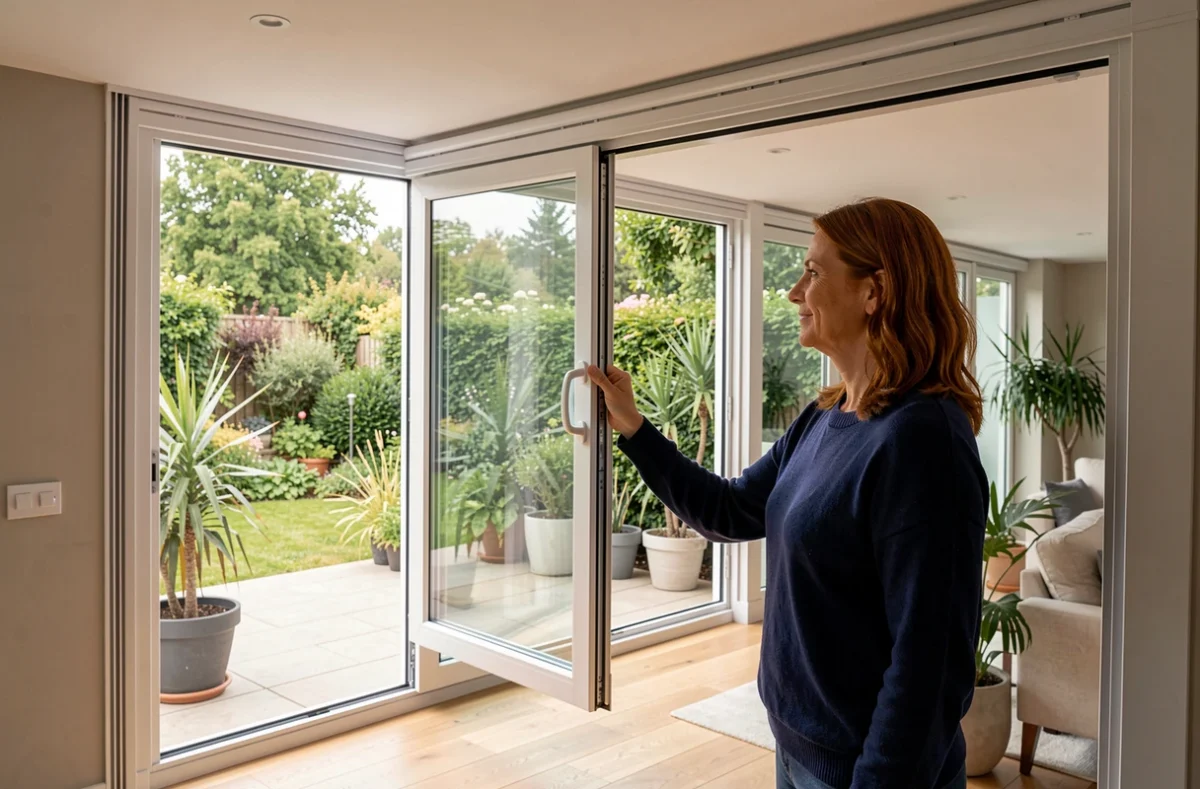
A recurring trap in renovation as well as in new construction: ordering a wide PVC sliding door without anticipating the weight of the glazing. According to field feedback published in September 2026, beyond about 3 meters in width, PVC can undergo progressive bending under the weight of double or triple glazing.
This phenomenon is not visible at installation. It appears after several months or even years. The leaf starts to rub, the sliding becomes less smooth, and the water tightness gradually deteriorates.
In practice, on a custom PVC sliding door project:
- Below 3 meters, multi-chamber PVC with steel reinforcement maintains its performance over time
- Between 3 and 3.5 meters, the choice depends on the type of glazing and wind exposure; it must be checked on a case-by-case basis with the manufacturer
- Beyond that, aluminum or a PVC-aluminum mix often becomes the more reliable choice to avoid deformation
Trend articles rarely mention this dimensional constraint. We end up with quotes for PVC doors 4 meters wide that, technically, will pose problems in the medium term.
MaPrimeRénov’ and PVC windows: the change from September 2026
Since September 1, 2026, according to decree n° 2026-822 of August 25, 2026, the isolated replacement of windows is no longer eligible for MaPrimeRénov’ by gesture. This change directly modifies the financial calculation of a custom PVC sliding window project.
In concrete terms, one can no longer change three windows and receive a unit aid per joinery. To benefit from the scheme, it is now necessary to integrate the replacement of windows into a large-scale renovation, with a demonstrated overall energy gain.
What this changes on the ground:
- A project limited to the replacement of sliding doors alone no longer qualifies for MaPrimeRénov’
- Coupling the windows with wall insulation or a heating change allows one to remain within the scheme
- The quote must anticipate the bundle of work from the start to avoid losing eligibility
- The reduced VAT rate and eco-PTZ remain accessible under conditions, independently of MaPrimeRénov’
For individuals who planned to only change their PVC sliding windows in 2026, the project needs to be rethought as a comprehensive renovation to maintain access to aid.
Revision of NF DTU 36.5: what may change for installation in 2026
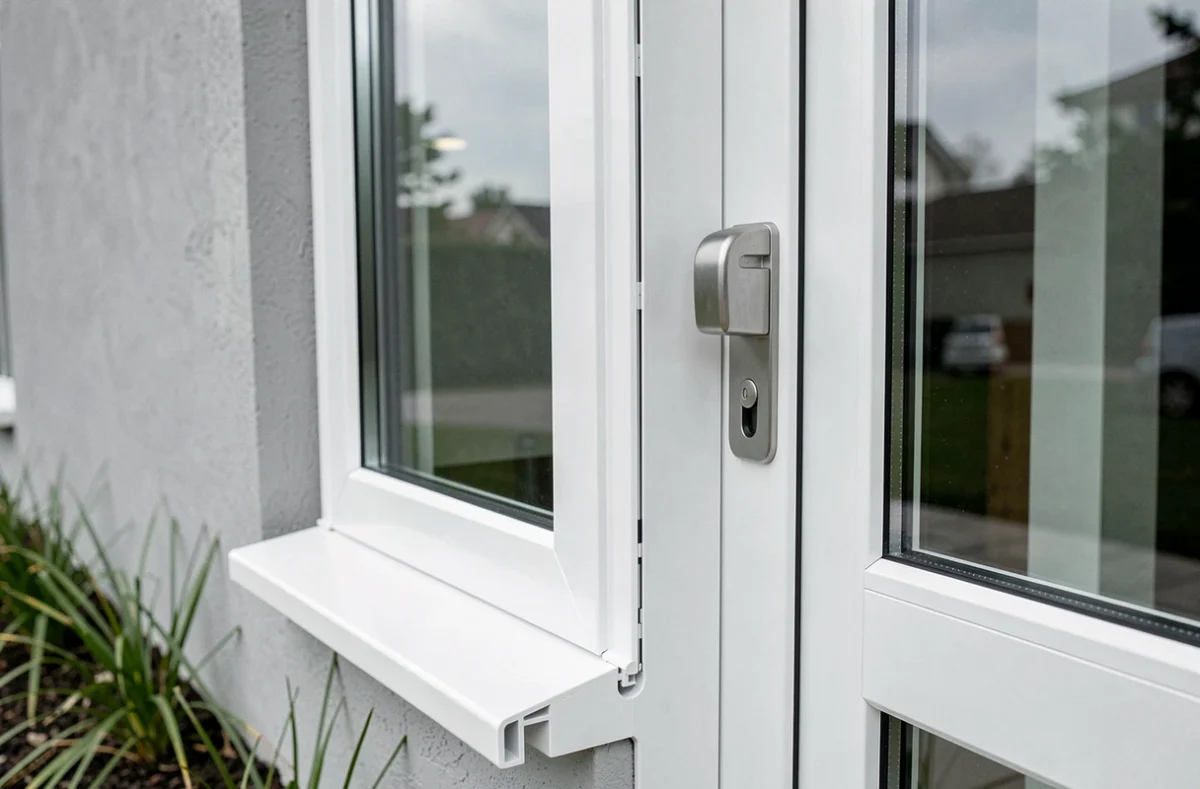
The NF DTU 36.5, which governs the implementation of windows and exterior doors, is undergoing a revision with a public inquiry announced for 2026. This unified technical document sets the installation rules that craftsmen must follow for the ten-year guarantee to apply.
A revision of the DTU is not trivial. It can modify sealing requirements, dimensional tolerances, or the conditions for implementing expanding foams. For a custom PVC sliding window, the sensitive points are the treatment of the threshold, the sill, and the peripheral water tightness.
Pending the final publication, every installation quote should mention the version of the DTU applied. If the revision comes into effect between the signing of the quote and the execution of the work, the installation methods may evolve. It is better to discuss this explicitly with the craftsman before signing.
Custom PVC sliding windows are evolving in 2026 on three simultaneous fronts: threshold accessibility, regulatory framework for aid, and installation rules. Before launching a quote, checking the maximum width suitable for PVC, the eligibility of the project for aid in its current form, and the version of the DTU that will apply remains the foundation of a solid project.