
A rainy Sunday, a week of vacation stretching out, or simply the desire to share a moment with others: there are plenty of opportunities to look for family activities. Finding fun and educational activities that appeal to both children and parents requires a bit of method. The classic trap is to multiply outings without considering what each child truly gains from them.
Creative workshops for families: how age changes the experience
You may have noticed that a four-year-old and a nine-year-old do not get the same experience from a painting workshop? The former explores textures, while the latter seeks a result. This difference in approach influences the choice of activity much more than the theme itself.
A clay modeling workshop, for example, works across a wide age range because everyone adapts their level of detail. The younger ones knead and stack. The older ones sculpt precise shapes. The successful activity is the one where each child progresses at their own pace.
Some museums offer workshops where children participate without their parents, such as the workshops at the Carrousel at the Museum of Decorative Arts. Other formats are designed to be followed together. Before booking, check this point: a parent-child workshop and an independent workshop do not meet the same need. The former strengthens family bonds, while the latter develops the child’s self-confidence.
Platforms like stationkids.fr gather this type of offerings and make it easier to search by age and format, avoiding the need to compare ten different sites.
Outdoor outings with children: the garden rather than the amusement park
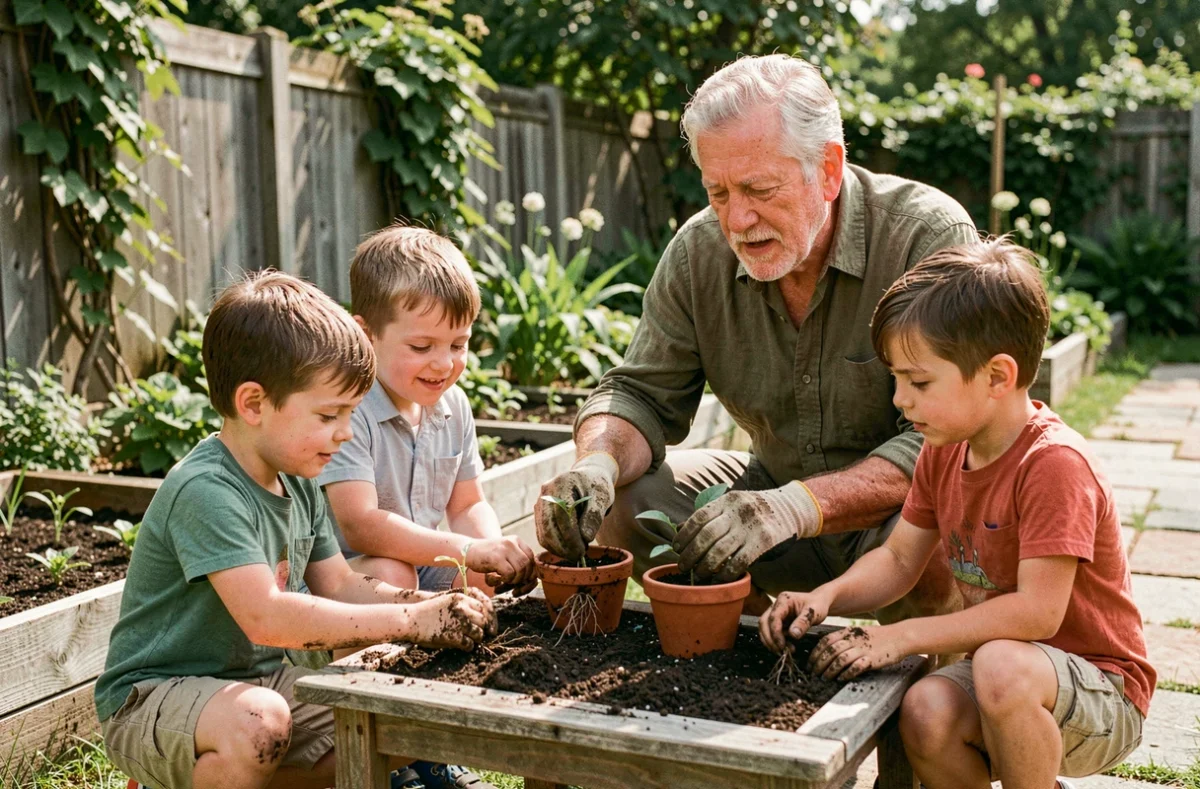
Parks and gardens are often underestimated as places of learning. A botanical garden teaches more about the seasons than a documentary. The child touches the bark, smells the leaves, observes the insects. Direct contact with living things anchors knowledge better than a screen.
Why choose this over a theme park? Because the stimulation is measured. In an amusement park, the child moves from one intense sensation to another without time to digest. In a garden, they choose their own pace. They stop by a pond, run on a lawn, come back to ask a question.
Turning a walk into an educational game
A simple walk becomes an educational activity with a concrete goal. Here are some examples that work:
- A sketchbook and the instruction to draw three different plants, even awkwardly. Observation becomes active.
- A guided collection (dead leaves, pebbles, feathers) followed by sorting by color or size at home. It’s classification without the word.
- A borrowed camera with a set theme (round shapes, warm colors). They learn to look differently.
The necessary materials fit in a backpack. No reservation, no ticket, no waiting line. This type of outing works just as well in the city as in the countryside.
Board games and activities at home: the overlooked educational potential
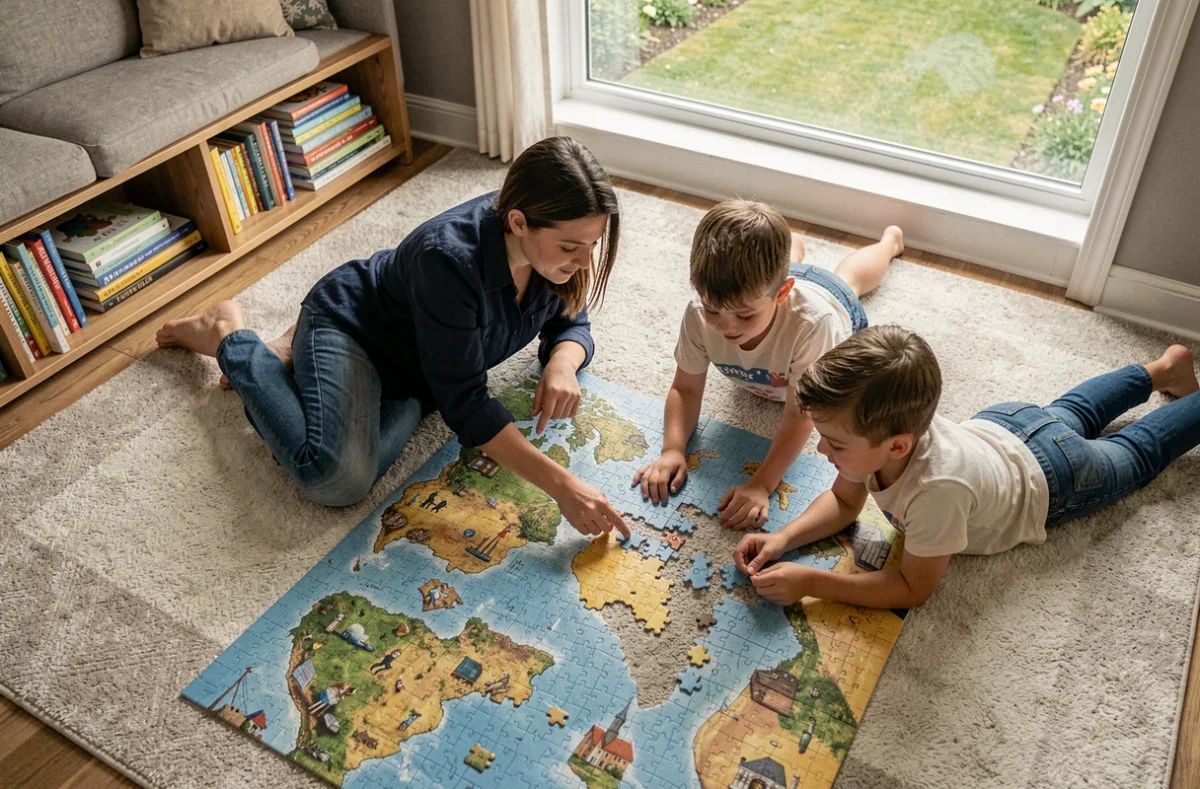
When it comes to keeping children occupied, the reflex is often to look for an outing. Home activities deserve the same attention. A well-chosen board game develops logic, patience, and negotiation skills.
Cooperative games, where all players win or lose together, are particularly suitable for families with children of different ages. The older sibling helps the younger one without competition creating frustration. Construction games (blocks, gears, circuits) encourage problem-solving and fine motor skills.
The kitchen as an educational workshop
Making a cake with a five-year-old is a disguised math lesson. They count the eggs, measure the flour, and observe a chemical transformation in the oven. The kitchen combines reading, math, and science without any apparent educational effort.
For older children, following a recipe from another country opens up a discussion about geography and eating habits. The result is edible, providing immediate satisfaction that few school activities can offer.
Visiting museums with children: prepare to avoid disappointment
Taking children to a museum without preparation often results in a shortened and frustrating visit for everyone. The difference is made before you arrive.
Some museums offer specific paths with age-appropriate activity booklets. A museum with a children’s path turns the visit into an investigation.
Reservations and access: what “free” doesn’t always indicate
One point that many parents discover on-site: free admission for children does not always mean direct access. Some places require a ticket or a time slot even when entry is free. Others operate with free access for their permanent collections but require a reservation for temporary exhibitions.
Practical accessibility also matters. With young children, the presence of elevators, suitable restrooms, and changing spaces is as important as the content of the visit. Strollers may be prohibited in certain rooms. Checking these details on the venue’s website before leaving avoids unpleasant surprises.
- Check the reservation policy for each museum, even for free entries.
- Identify off-peak times: Tuesday mornings or Wednesday early afternoons often work better than weekends.
- Plan a short visit (one hour is enough with under-sixes) rather than a marathon that exhausts everyone.
The best activities to keep your children occupied as a family are not necessarily the most spectacular. A modeling workshop, a walk with a sketchbook, a cooperative game, or a prepared visit leave lasting impressions. What matters is the quality of shared attention, not the price of the ticket.