
When planting lavender at the edge of a vegetable garden or near a terrace, one expects to keep mosquitoes at bay. The scent of lavender indeed disturbs several species of insects and some mammals, but it also attracts others. Understanding who flees and who stays helps avoid unpleasant surprises and allows for placing lavender plants in the right spots.
Olfactory cocktail in the vegetable garden: why lavender alone is not always enough
There is a tendency to treat lavender as a universal repellent. On the ground, feedback varies depending on the targeted species, the variety of lavender used, and especially the presence of other aromatic plants nearby.
Research from iEES-Paris (INRAE, CNRS, Sorbonne University) communicated in 2024 shows that it is the mix of lavender, peppermint, and lemongrass that truly disrupts the orientation of pests such as aphids and whiteflies on vegetable crops. Each scent taken separately is often insufficient. The cocktail creates an “olfactory landscape” that these pests avoid.
Specifically, to protect a row of tomatoes or zucchini, it is beneficial to combine lavender with potted peppermint (as it is invasive in open ground) and a few lemongrass plants. The relationship between insects and lavender thus depends as much on the plant context as on the plant itself.
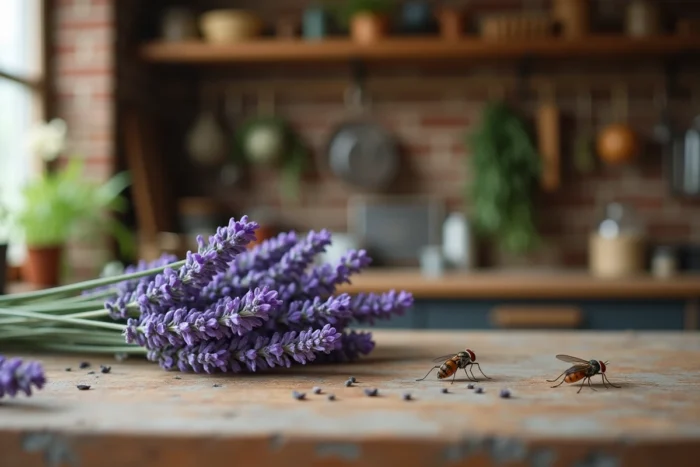
Mosquitoes, moths, and aphids: which insects flee the scent of lavender
Not all insects react the same way to linalool and linalyl acetate, the two main compounds of lavender essential oil. Here are the species for which the repellent effect is best documented.
- Mosquitoes: lavender disrupts their detection of human CO2. Dried flower sachets near a window or a few drops of essential oil on a cloth reduce bites in the evening, without completely eliminating them.
- Clothing moths: lavender sachets in wardrobes remain a reliable method to protect wool and silk textiles. The scent masks the chemical signals that these micro-moths use to locate animal fibers.
- Aphids and whiteflies: in combination with other aromatics, lavender helps to disorient these vegetable pests, as confirmed by the chemical ecology work of iEES-Paris.
- Flies: lavender placed near a fruit basket or compost area reduces the presence of houseflies, without absolute guarantee in high heat.
Spiders, a special case
Spiders are not insects but arachnids. They seem to avoid areas heavily impregnated with lavender essential oil. A spray of water mixed with a few drops, applied to door frames and window sills, is a method often cited to limit their entry into the house.
The effect remains temporary. It is necessary to renew the application every two weeks to maintain a sufficient concentration.
Lavender and pollinators: a field that attracts as much as it repels
One cannot speak of lavender as a repellent without mentioning the other side. Flowering lavender fields, from June to July in southern France, host a remarkable biodiversity of pollinators: honeybees, bumblebees, butterflies, hoverflies.
Lavender repels certain pests but strongly attracts pollinators. This is a distinction that many articles overlook. Planting lavender to keep mosquitoes away from a terrace makes sense. Expecting a garden without any insects thanks to lavender is contradictory to the very functioning of the plant.
If one wants to protect a specific area (house entrance, poolside), it is better to use essential oil in diffusion or spray rather than plants in open ground, which will attract foragers during the flowering period.
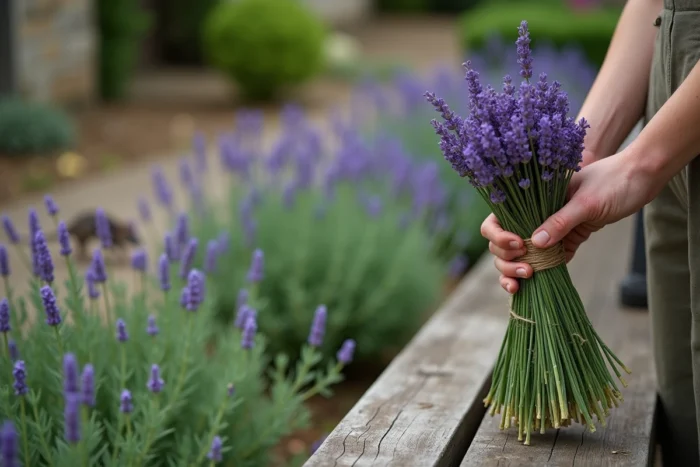
Martens, mice, and rats: which mammals avoid lavender
On the mammal side, smell plays a central role in territorial and feeding behavior. Several species show an aversion to the volatile compounds of lavender.
Martens and rodents in the attic
The marten, which readily settles in attics and technical shafts, has a hard time with strong and persistent odors. Dried lavender sachets placed at entry points (gutters, roof crevices) can deter it from settling. Regular renewal of the sachets is key, as the scent fades in a few weeks.
Mice and rats also show an avoidance reaction to lavender essential oil, but this method remains a supplement. In the face of an established infestation, lavender alone does not solve anything. It works better as a preventive measure, combined with sealing access points.
Cats: attracted or repelled depending on the variety
Cats generally avoid true lavender (Lavandula angustifolia). Plants placed around a flower bed or vegetable garden limit their passage and scratching. Some gardeners use it to protect fragile sowing areas.
However, the reaction varies from individual to individual. Some cats seem indifferent or even curious. Testing with a sachet before planting remains the most reliable method.
Essential oil or plant in the ground: which form to use depending on the area to protect
The choice between planted lavender and essential oil depends on the objective and location.
- At the edge of a vegetable garden or garden: lavender plants combined with mint and rosemary create a lasting olfactory barrier against aphids and some rodents.
- At house entrances and windows: a spray of lavender essential oil diluted in water, renewed regularly, keeps spiders and mosquitoes away without attracting pollinators.
- In wardrobes and attics: dried flower sachets protect against clothing moths and deter martens from settling.
- Near a terrace or pool in summer: prefer the diffusion of essential oil rather than flowering plants, which will attract bees and bumblebees.
Lavender remains a tool among others in a pest management strategy in the garden and home. Its effectiveness depends on the regularity of application, the association with other aromatic plants, and the type of pest targeted. Expecting a radical result on an established species would overestimate its capabilities, but as a first line of natural defense, it deserves its place in every garden.