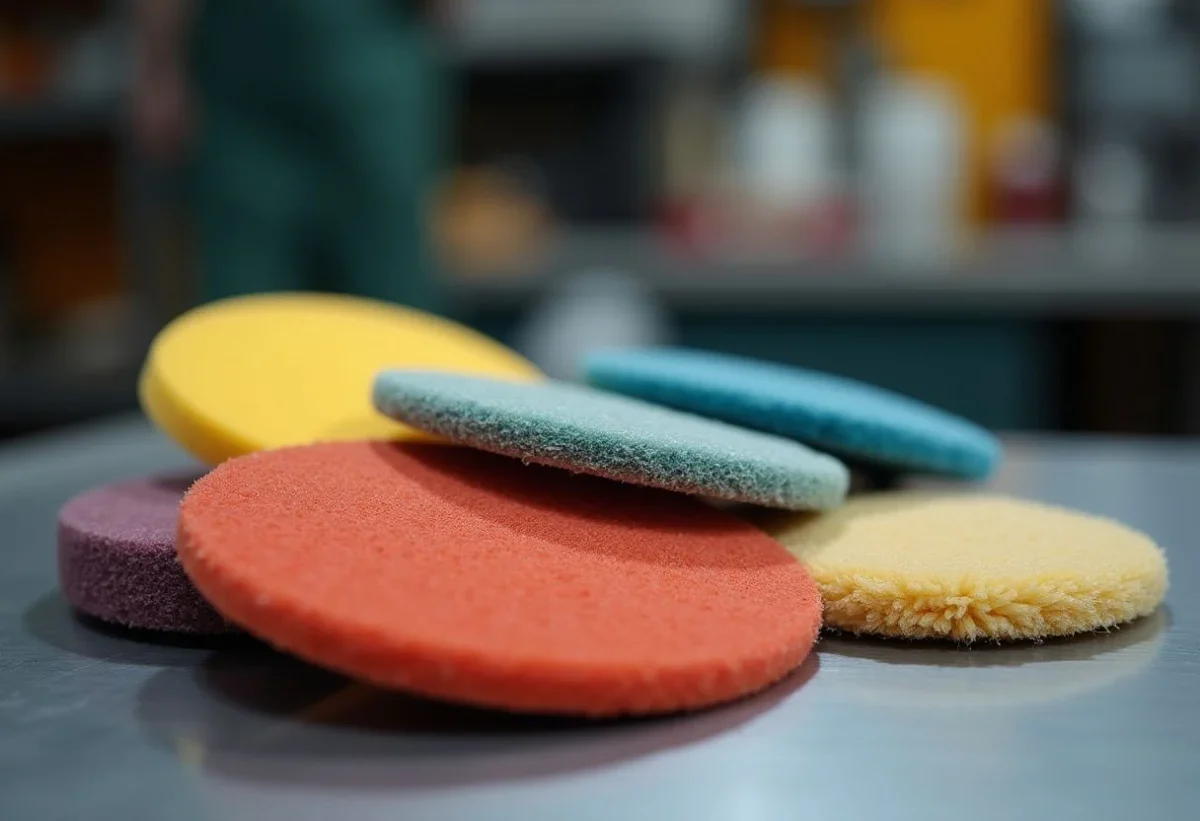
The world of polishing is fascinating, combining technique and precision to transform dull surfaces into true works of art. The polishing disc proves to be an essential tool for automotive enthusiasts, artisans, and professionals looking to provide a brilliant and flawless finish. However, this instrument, seemingly simple at first glance, hides a complexity and diversity that few suspect. Its use is not limited to erasing scratch marks but extends to optimizing shine and restoring various materials. A meticulous approach and appropriate choice of disc are essential for achieving exceptional results.
The different types of polishing discs
For each polishing task, there is a specific type of disc that, with its unique characteristics, ensures optimal performance.
- Foam discs: recognized for their versatility, foam discs are widely used for applications requiring a soft and even finish. They adapt well to delicate surfaces and help minimize the risk of damage.
- Microfiber discs: also popular, these discs are perfect for removing residues and providing a brilliant shine. They are often preferred for working with liquid polishing products.
- Wool discs: designed for more robust tasks, wool discs are ideal for correcting deep imperfections on resilient surfaces. Their texture provides effective abrasive action.
Choosing the right polishing disc
The choice of the right polishing disc depends on many factors, including the material to be polished and the desired result. A thorough understanding of these aspects is necessary to achieve perfection.
When polishing your car, it is crucial to consider the hardness of the clear coat and the nature of the paint. A disc that is too aggressive risks irreparably damaging the surface, while a disc that is too soft may prove ineffective. Different manufacturers offer guides and diagrams to facilitate this choice, helping to determine the most appropriate tool based on the task.
Some experts recommend having a set of polishing discs with various degrees of abrasion to adapt to the diverse needs of surfaces. This allows starting with a more abrasive disc to correct imperfections, followed by a softer disc to refine the work and provide the final touch of shine.
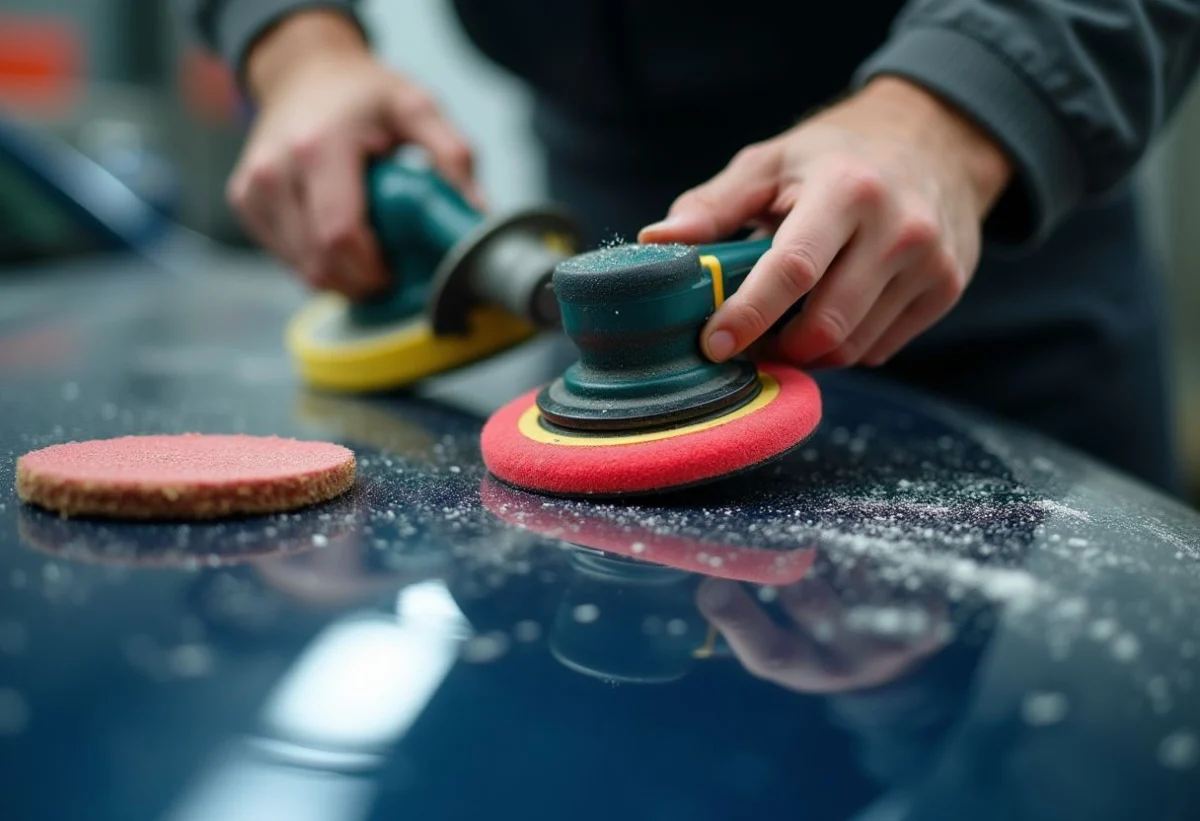
Polishing techniques and practices
The polishing technique is as important as the choice of disc. Even with the best tools, poor practice can compromise the final result.
It is often recommended to work in sections, applying even pressure and using a crosshatch motion. This method ensures complete coverage and avoids polishing marks, often caused by uncontrolled circular movements. Maintaining a constant speed is also crucial to ensure a uniform finish.
Experts recommend always starting with the least visible section to test the behavior of the polishing disc on the material to be treated. This preliminary test allows for technique adjustments if necessary before moving on to more visible areas.
Maintenance and durability of polishing discs
Regular maintenance of polishing discs extends their lifespan and preserves their effectiveness.
- After each use, clean the disc with warm water to remove residues of products and materials.
- Allow to dry completely in the open air. Using a direct heat source can warp the discs.
- Store the discs away from dust and moisture to avoid any contamination that could affect future polishing.
Investing in specific cleaning devices for discs can be a practical solution, especially for professionals who frequently use these tools. This not only ensures optimal cleanliness but also prolongs and makes usage cost-effective.
The polishing disc is a fascinating instrument that combines science and art. For it to reveal its full potential, a deep understanding of its types, selection, and techniques is essential. When used correctly, it allows achieving a perfect finish, making every surface shine and impeccable.