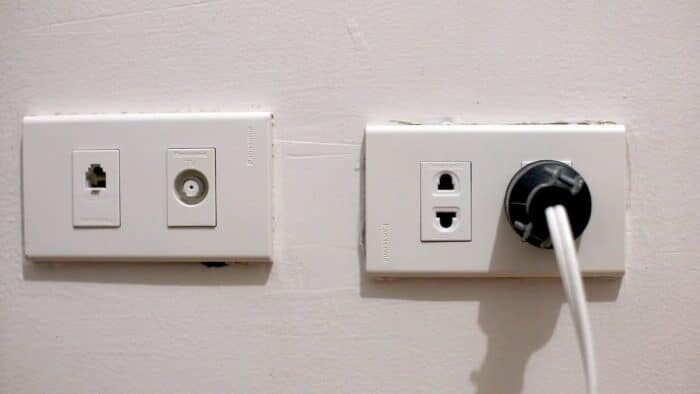
Technological evolution has enabled manufacturers of household appliances to design products with varied features to meet consumer needs. This diversity has led to some complexity in terms of choices for electrical outlets. Indeed, there are different power outlets available on the market, each suited to a specific type of household appliance. The standard outlet, the grounded outlet, the 20A outlet, and the three-phase outlet are among the most commonly used. Their proper use ensures not only optimal performance of the appliances but also the safety of users.
Electrical Outlets: A Story of Connections
Let’s start by examining a specific type of electrical outlet designed for one of the most revolutionary inventions of the 20th century: the microwave oven. We are talking here about the ‘microwave outlet’, a common designation that reflects a significant advancement in the design and use of electrical outlets.
Historically, with the commercialization of the first microwave oven in the United States in 1947, it quickly became apparent that this new household appliance required a more robust connection than that offered by the standard outlets of the time. This is how the ‘microwave outlet’ was born, a version specially designed to meet the specific energy needs of this type of appliance.
The ‘microwave outlet’ is therefore distinguished by its well-defined technical characteristics. It must be capable of supporting a higher intensity than other types of domestic outlets to effectively power the microwave oven without the risk of overheating or short-circuiting. Furthermore, it must also have a reliable grounding system to ensure user safety.
In Europe, the Schuko or Type F format is generally used as the standard for ‘microwave outlets’. With a nominal voltage of up to 250V and a maximum capacity of 16A, these outlets are perfectly suited for the regular operation of the microwave oven.
In the United States, however, the NEMA 5-20R or Type B outlet is primarily recommended for connecting microwave ovens. Designed to support a voltage of 125V and a capacity of up to 20A, it is perfectly adapted to the energy needs of American households.
The ‘microwave outlet’ illustrates how the evolution of design and technology in household appliances has influenced—and continues to influence—the development of electrical outlets. As we continue to innovate in the field of household appliances, we can expect to see new types and formats of outlets emerging in the near future.
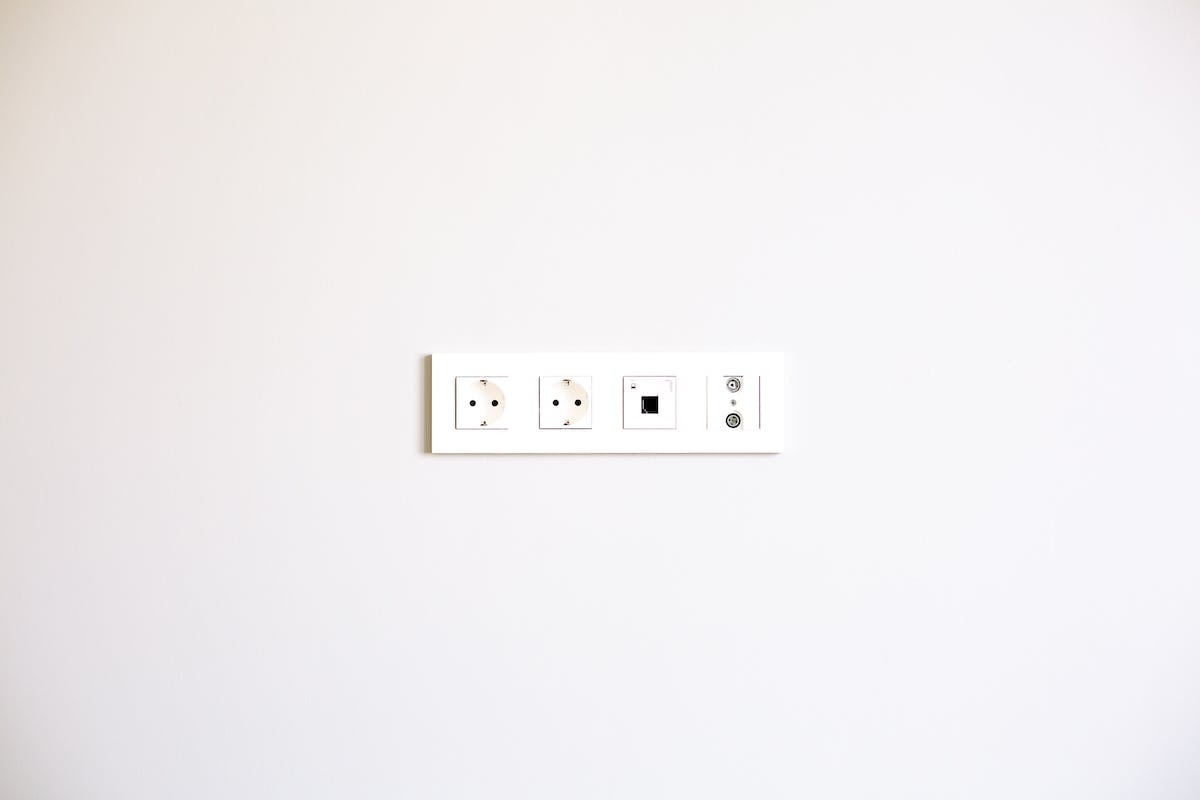
Standards and Norms: The Global Unification of Outlets
In an increasingly connected world, international standards and norms are needed to ensure a harmonious interoperability of household appliances. This allows consumers to use their equipment in different countries without encountering issues related to the compatibility of electrical outlets.
One of the organizations that plays a key role in this harmonization is the International Electrotechnical Commission (IEC). Founded in 1906, the IEC establishes technical standards and norms for electrical and electronic equipment used worldwide. These standards are developed by experts from various fields such as electricity, electronics, and cybersecurity.
Regarding electrical outlets, the IEC has developed several international standards to unify their design and facilitate their global use. Among these standards are Type A, Type B, Type C, and Type F. Each type corresponds to a specific set of characteristics such as the shape of the casing, the number and arrangement of pins, and the nominal voltage supported.
Type A is widely used in North America with two parallel flat pins, while Type B adds a third pin to ensure safe grounding. Type C, on the other hand, is common in Europe with two round pins for powering small electronic devices such as mobile phones or tablets. Type F is also widespread in Europe, particularly in Germany, with two round pins that are slightly further apart.
Thanks to these international standards from the IEC, manufacturers of household appliances can design outlets compatible with different regions of the world. This greatly simplifies the lives of consumers, allowing them to travel without worrying about outlet compatibility at their destination.
It should be noted that despite these international standards and norms, there may still be some local variations. For example, some countries still use specific outlets or have their own requirements regarding electrical compatibility. It is essential to research the types of outlets used in each country before departure.
The international standards and norms play a crucial role in the harmonization of electrical outlets worldwide. Thanks to the ongoing efforts of the IEC and other similar organizations, we can enjoy facilitated global connectivity and use our household appliances wherever we are.
Outlets in Europe: Between Diversity and Harmonization
Within the European continent, the electrical outlets used can vary from country to country. Most European countries comply with the standards established by the IEC to ensure a certain uniformity in their connection systems.
One of the most commonly used outlets in Europe is Type F, also known as the ‘Schuko’ outlet. This type of outlet is widely used in Germany, Austria, and several other European countries. It is characterized by its two slightly spaced round pins and its integrated grounding device that ensures a safe and reliable connection.
Type F offers a high level of safety due to its robust design that prevents any risk of electric shock or short circuit. This outlet often features a child-proofing system not only to protect curious children but also to prevent any accidental insertion of metallic objects that could cause accidents.
In France, Belgium, and Luxembourg, Type E is frequently found. This outlet has three round pins arranged in a triangular shape, with two side contacts connected to the grounding, while the central contact ensures the electrical phase.
In some Scandinavian countries like Sweden and Norway, Type C or sometimes Type E/F outlets are used instead. These two types are similar with round pins, but Type C does not include a grounding system.
It is important to note that even though some harmonization has been achieved in Europe, there are still some variations from country to country. For example, some countries like the United Kingdom use their own specific electrical outlets, such as Type G with its three square or rectangular pins.
When traveling in Europe or other parts of the world, be sure to familiarize yourself with the types of outlets used in each country to avoid any unpleasant surprises when plugging in your household appliances. Universal adapters are available to facilitate this task and ensure total compatibility between your equipment and the various local standards.
Despite some regional differences still present within the European continent, electrical outlets have benefited from harmonization thanks to the efforts made by the IEC. This standardization allows European consumers as well as international travelers to fully enjoy the benefits offered by their household appliances without any concerns related to incompatibility of connection systems.
North America: When Outlets Make the Difference
The situation is, however, different in North America, where the electrical outlets used differ from European standards. The United States and Canada have agreed on a very specific electrical connection system, with outlets that differ greatly from those found in Europe.
In the United States, the standard outlet is known as Type A or NEMA 1. It is characterized by two parallel flat pins that allow connection to both the phase and neutral of the electrical circuit. However, this outlet does not include an integrated grounding, which can pose a risk for some sensitive devices requiring protection against electrostatic discharges.
On the other hand, there are also outlets in the United States with integrated grounding, called Type B or NEMA 5. They feature two identical flat pins designed to ensure contact with the alternating current and the neutral of the electrical network. A third wider pin is provided to ensure a safe connection to ground.
In Canada, the same types of outlets as in the United States are generally found: either Type A without grounding and Type B with integrated grounding. It should be noted that some Canadian provinces have adopted their own regulations regarding residential electrical installations.
In these vast, diverse, and culturally as well as geographically distinct North American countries, the electrical outlets used are specific to this region of the world. If you travel across the Atlantic, you need to equip yourself with suitable plug adapters to ensure compatibility with local electrical systems.
It should be emphasized that even within North American countries themselves, some variations exist in the use of outlets. For example, Mexico has adopted its own standards and uses outlets similar to those in the United States with some slight differences.
In North America as in Europe, electrical connection systems vary from country to country according to local regulations and standards. It is up to consumers as well as international travelers to be well-informed about the types of outlets used in each region to avoid any problems when connecting their household appliances.
To facilitate these processes and ensure total compatibility with local standards wherever you go in America or Europe, or in any other part of the globe, a universal adapter is your best ally to face these differences and ensure a safe and effective connection between your household appliances and the local electrical network.
Asia: A Patchwork of Electrical Outlets
Asia, a continent of multiple cultures and traditions, also presents great diversity regarding the electrical outlets used to power household appliances. Each country has its own connection standards, which means that when traveling in this region of the world, one must be well-prepared with the appropriate adapters to avoid any unpleasant surprises.
In China, the standard outlet used is known as ‘Type A’ or ‘CPCS-CCC’. It consists of three flat pins arranged in an equilateral triangle. Two of the pins are intended for the phase and neutral of the alternating current, while the third wider pin ensures grounding. It should be noted that some high-end hotels in China also provide universal outlets to accommodate their international guests.
In Japan, two main types of outlets can be found: ‘Type A’ or ‘JIS C 8303’ and ‘Type B’ or ‘JIS C 8303/1’. Type A has two parallel flat pins similar to those used in the United States, while Type B has an additional pin for grounding. These Japanese outlets may differ from standard European ones, so it is crucial to bring an appropriate adapter if you travel there.
In several South East Asian countries, including Indonesia, Malaysia, and the Philippines, ‘Type A’ or ‘BS 1363’ outlets are generally used. This outlet features three rectangular pins, two of which are for phase and neutral, while the third allows for secure grounding.
Electrical Outlets: Towards New Innovations
In terms of electrical outlets, new trends emphasize safety, practicality, and aesthetics. Manufacturers are constantly seeking to innovate to meet consumer needs while adhering to international standards.
One of the current trends is the development of outlets equipped with protection systems against surges and short circuits. These devices ensure the safe use of household appliances, thus avoiding potential incidents related to improper handling or fluctuations in electrical current.
Smart outlets are also highly sought after by consumers. They allow for remote management of connected devices via a dedicated mobile app. It becomes possible to turn devices on or off from a smartphone, as well as to schedule their operation according to specific needs.
Aesthetics are also a focus in this quest for innovation. Manufacturers today offer a wide range of designs that combine style and functionality.