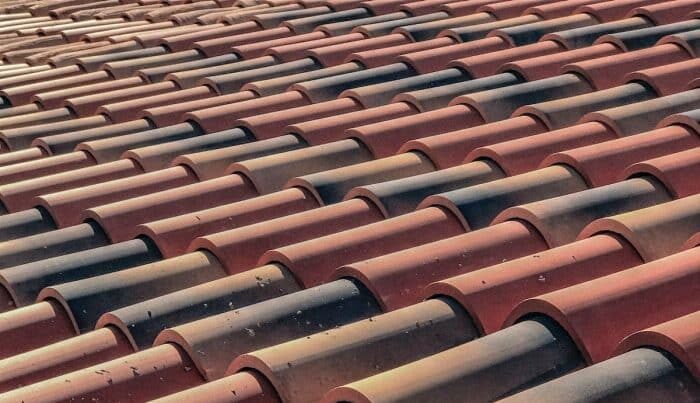
Are you considering renovating your roof or building a new house? An essential aspect to consider is the number of tiles needed to cover your roof. This may seem complex at first, but don’t worry, it’s a task that can be easily accomplished with a bit of knowledge and preparation. This guide is designed to help homeowners understand how to effectively estimate the number of tiles needed per square meter for their roofing project. It will assist you in planning your budget, avoiding disruptions, and achieving a successful final result.
Estimating the number of tiles per m²: the basics
In the construction field, and more specifically in roofing work, a predominant question regularly arises: ‘how many tiles per m2?’. This question is crucial for anyone planning a project related to this vital aspect of the building. It is a fundamental component that allows for the establishment of a precise quote and control over the associated costs of your undertaking.
To determine how many tiles per m2 you will need, several parameters must be taken into account. First and foremost, it is, of course, the specific dimensions of the tiles you have chosen. Thus, with common tiles measuring 22 cm x 32 cm for example, it is estimated that between 34 and 35 units would be needed to cover an area of one square meter.
You must also consider the exposure • that is, the useful part of the tile that remains visible once laid • as this can vary according to models and directly influence the total number needed per square meter.
Moreover, keep in mind that it is wise to add an additional 5% to 10% to the initial estimates to anticipate any unforeseen circumstances or damage during transport or installation.
Finally, note that certain types of roofs may require more or less material depending on their slope or architectural features (presence of a chimney, skylights, etc.).
The exact understanding of the term ‘how many tiles per m2?’ then becomes essential to avoid any financial inconvenience related to underestimating the actual number required for your project.

Accurate calculation methods for the necessary tiles
In the quest for a precise estimate of the number of tiles needed per square meter for your roofing project, be sure to choose the materials carefully.
The first method involves calculating the total surface area of the roof. To do this, you need to accurately measure the length and width dimensions of the roof. Once these values are obtained, multiply them to get the area in square meters. For example, if the roof measures 10 meters long by 8 meters wide, then the total surface area will equal 80 square meters.
Once you have determined the total surface area of the roof, you can move on to the next step: defining the slope of the roof. Indeed, a sloped roof generally requires fewer tiles than a flat roof. The slope will also influence the choice of types and installation methods for the tiles.
We must take into account the overlap between the tiles. This factor varies according to the type and specific model chosen for your project. Manufacturers generally provide this information in their technical documentation so that you can make an accurate calculation.
Beyond the fundamental elements, be sure to consider some additional details such as the shape and size of the tiles, the necessary cuts for roof elements such as chimneys or skylights, as well as the loss due to falls and potential breakages. These variables must be taken into account to achieve the most accurate estimate possible.
By using these calculation methods, you can obtain a realistic approximation of the number of tiles needed for your project. It is also recommended to consult an experienced professional in the roofing field to refine this estimate and ensure that all specifics related to your project are taken into account.
Let us remember the importance of good preparation before undertaking any project. A precise estimate of the number of tiles needed per square meter will not only save you time and resources but also ensure the durability and overall aesthetics of your roof.
Practical tips for optimal and error-free estimation
Here are some practical tips to optimize your estimate of the number of tiles needed per square meter and avoid common mistakes in this process.
It is recommended to consider the type of roofing you are considering. Different types of roofs, such as sloped roofs, flat roofs, or multi-level roofs, can significantly influence the estimate of the number of tiles required. Be sure to adapt your calculation accordingly.
Be aware that there is an impressive variety of tiles on the market. Each type offers its own technical characteristics and specific dimensions. It is crucial to pay attention to these details when making your choice to avoid any incompatibility with the existing structure or complications later during installation.
Another aspect to consider is the local climate exposure. Weather conditions such as excessive rain, strong winds, or even hail can directly impact the intensity of potential damage to your tiles and their durability over time. Take this into account to ensure an adequate choice that will preserve not only the appearance but also the overall resistance of the covering.
Don’t forget that good under-roof ventilation greatly contributes to maintaining a stable temperature in the attic and thus protects your tiles from premature deterioration due to thermal excesses. A precise assessment of ventilation needs will optimize your estimate of the number of tiles needed.
The assistance of a qualified professional is highly recommended to refine your estimate. Some specialized craftsmen have advanced tools and software that allow for even more precise evaluations by taking into account factors such as complex angles, specific cuts, or particular architectural constraints.
You should take the necessary time to carry out a meticulous estimate of the number of tiles needed per square meter for your roofing project. By considering all these practical tips, you will avoid common mistakes and thus ensure both the technical and aesthetic success of your project.