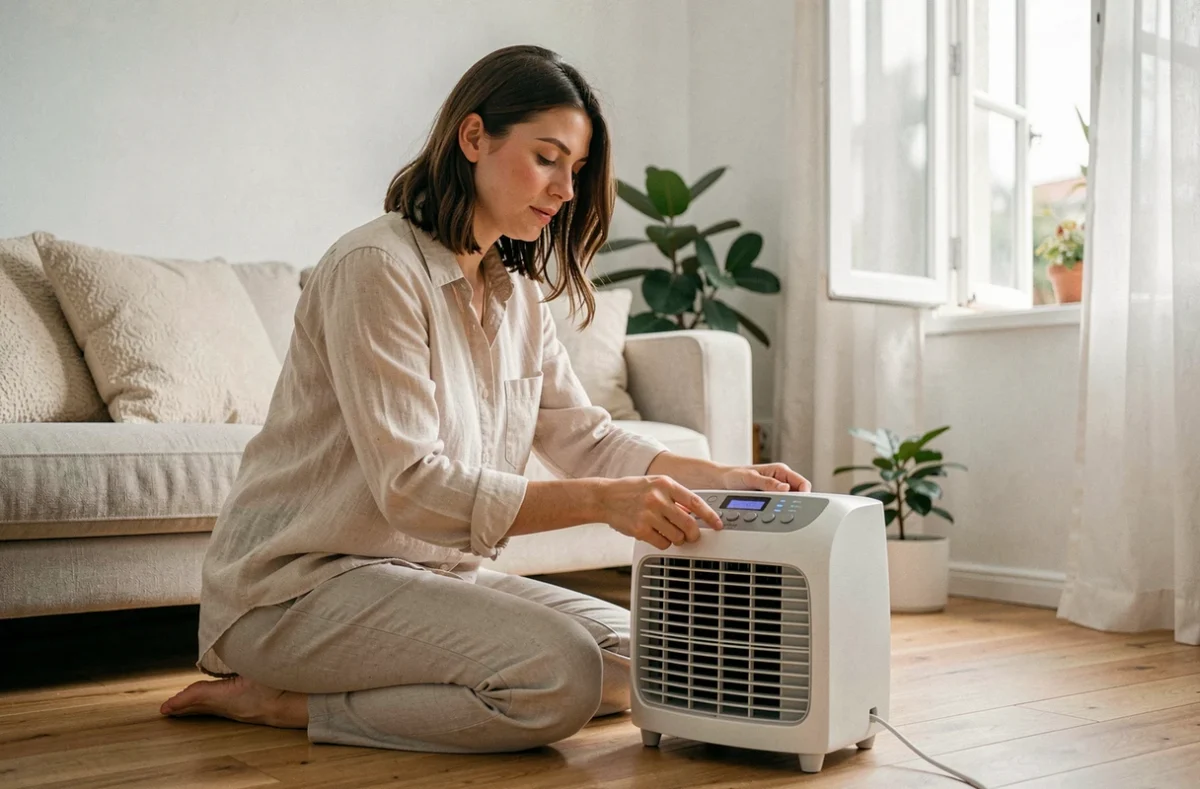
An air cooler relies on the evaporation of water to lower the ambient temperature. This simple principle hides a variable that most guides overlook: the humidity level in the room alone determines the temperature difference that the device can produce. Measuring this data before and during use radically changes the results obtained.
Air Cooler and Humidity Level: The Determining Factor
Evaporative cooling works on a thermal exchange between water and dry air. The drier the air, the faster the evaporation, and the more noticeable the temperature drop. Conversely, in already humid air, evaporation slows down and the device loses efficiency.
Bosch Home Comfort specifies that humidity above 60% promotes mold growth, especially when air circulation is insufficient. This threshold serves as a concrete guideline for deciding whether to keep the cooler running or to turn it off.
| Indoor Humidity Condition | Cooler Efficiency | Recommended Action |
|---|---|---|
| Below 40% | Suitable: marked temperature drop | Free use, optional ice packs |
| Between 40% and 60% | Acceptable: moderate drop | Crack a window to expel humidity |
| Above 60% | Low to none | Turn off the device, ventilate the room, prefer a fan |
A basic hygrometer is sufficient to monitor this data. Some models of coolers include a humidity display, but an independent sensor placed at chest height provides a more reliable measurement of the air actually being breathed.
To fully understand the effectiveness and use of an air cooler, this relationship between humidity and performance is the first parameter to master.
Cross Ventilation and Expelling Humid Air: Room Configuration
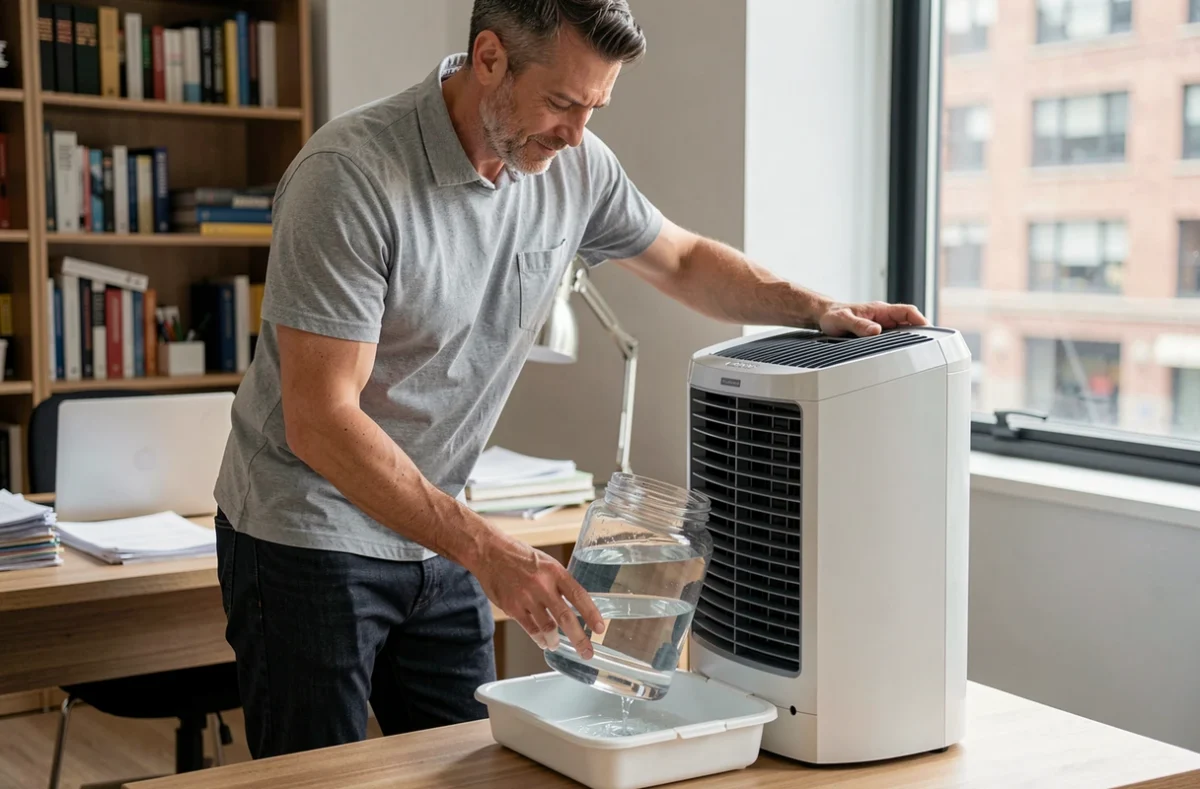
An air cooler is not an air conditioner. It does not operate in a closed circuit. The air it expels is cooler but also more humid. Without expulsion, humidity accumulates and efficiency drops within minutes.
The solution can be summed up in one word: cross ventilation. The device draws air from one side of the room while a window or door slightly open on the opposite side allows humid air to escape. This continuous flow prevents saturation.
Common Positioning Mistakes
- Placing the cooler in a corner without an opening nearby: humid air stagnates around the device, and the perceived temperature rises quickly.
- Closing all windows thinking “to keep it cool”: the logical reflex with air conditioning becomes counterproductive with an evaporative system.
- Aiming the airflow at a wall or large piece of furniture: circulation is blocked, and the cool zone shrinks to less than a meter around the device.
Positioning the cooler facing the air inlet (window cracked on the shaded side) and allowing an air outlet on the other side of the room creates a natural current that continuously renews the dry air. This simple spatial adjustment makes a clearer difference than choosing between two price ranges of devices.
Local Climate and Usage Periods: Adapting the Cooler to Actual Weather
Recent recommendations converge: coolers are especially suited for hot and dry episodes. In Mediterranean or continental climates during summer heat peaks, conditions are ideal. Conversely, in regions with high natural humidity (Atlantic coast, humid coastal areas), the device provides little additional comfort compared to a simple fan.
This point should be established before purchase, not after. A regularly humid dwelling is more suited to air conditioning or a solution that includes dehumidification.
When to Turn Off the Cooler
In the evening, relative humidity naturally rises. The device then becomes less effective, and prolonged operation increases humidity in the air without thermal gain. Turning off the cooler when humidity exceeds the 60% threshold preserves comfort and limits the risk of condensation on cold surfaces (windows, north walls).
Maintenance of the Reservoir and Filter: Direct Impact on Air Quality
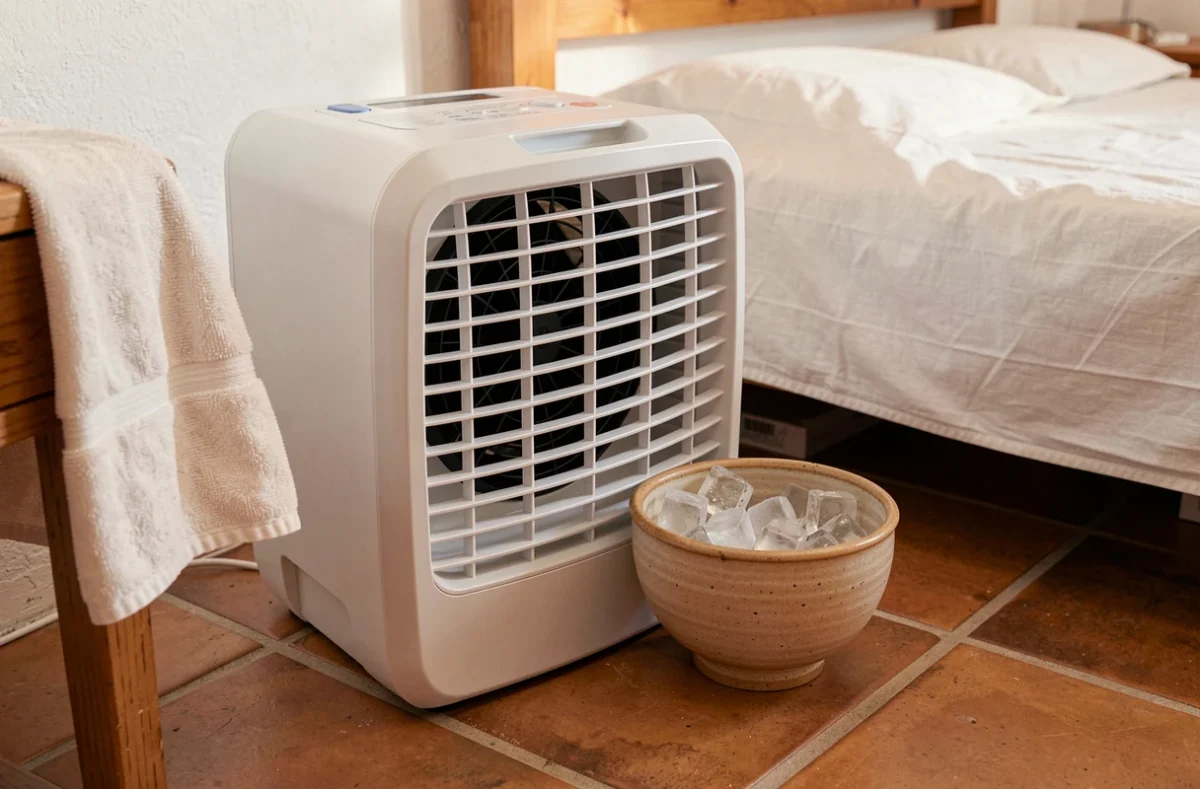
The water reservoir is the sensitive point of the cooler. Stagnant water at room temperature becomes a favorable environment for bacteria within days. Clogged filters reduce airflow and can spread particles into the room.
The complete drying of the reservoir between uses is the most effective measure to prevent microbial proliferation. Emptying residual water after each session, leaving the tank open to air dry, and cleaning the filter according to the manufacturer’s recommendations are sufficient to maintain acceptable air quality.
- Empty the reservoir after each use, even if some water remains.
- Rinse the filter with clear water once a week during frequent use.
- Regularly replace the ice packs: their porous surface can retain organic residues.
- Never add scented products or oil to the reservoir: this clogs the filter and reduces evaporation.
A clean filter and a dry reservoir between usage cycles represent the two maintenance actions that have the most impact on the device’s lifespan and on the quality of the air distributed in the room.
The air cooler remains a simple device, but its performance entirely depends on the context in which it operates. Measuring humidity, organizing air circulation, and maintaining the reservoir are three concrete levers that separate an effective device from one that circulates warm, humid air.