
A club secretary who discovers on a Monday morning that a player’s licence has not been approved for the weekend’s game, even though it was entered in FBI V2, is a familiar scenario—and one that still holds teams back every season.
The FFBB extranet brings together the administrative management of basketball clubs in France, from licences and match sheets to referee training schools. User errors are common, often repeated, and almost always avoidable.
FBI V2 user accounts: the weak link in club management
This is often where clubs start, and it’s precisely where the first problems arise. A newly affiliated club receives a single administrator login. The natural instinct is to share it among the president, secretary and treasurer. This is a mistake that leads to session conflicts and unintended changes.
FFBB how-to guides recommend creating a separate user account for each club officer who needs access to FBI V2. Each profile can then be assigned permissions suited to the user’s role. A treasurer doesn’t need access to result entry, and a sports manager shouldn’t be able to change the organisation’s contact details.
When reviewing common mistakes on the FFBB FBI V2 extranet, account management consistently tops the list. The lack of individual accounts also makes it harder to track activity: it’s impossible to know who approved or rejected an exemption if everyone uses the same login.
- Create a named account for every board member who uses FBI V2 as soon as the club is affiliated.
- Assign permissions based on each person’s actual role (licence management, result entry, general administration).
- Remove or deactivate former officers’ accounts at the start of the season to prevent outdated access.
Licence entry errors on the FFBB extranet
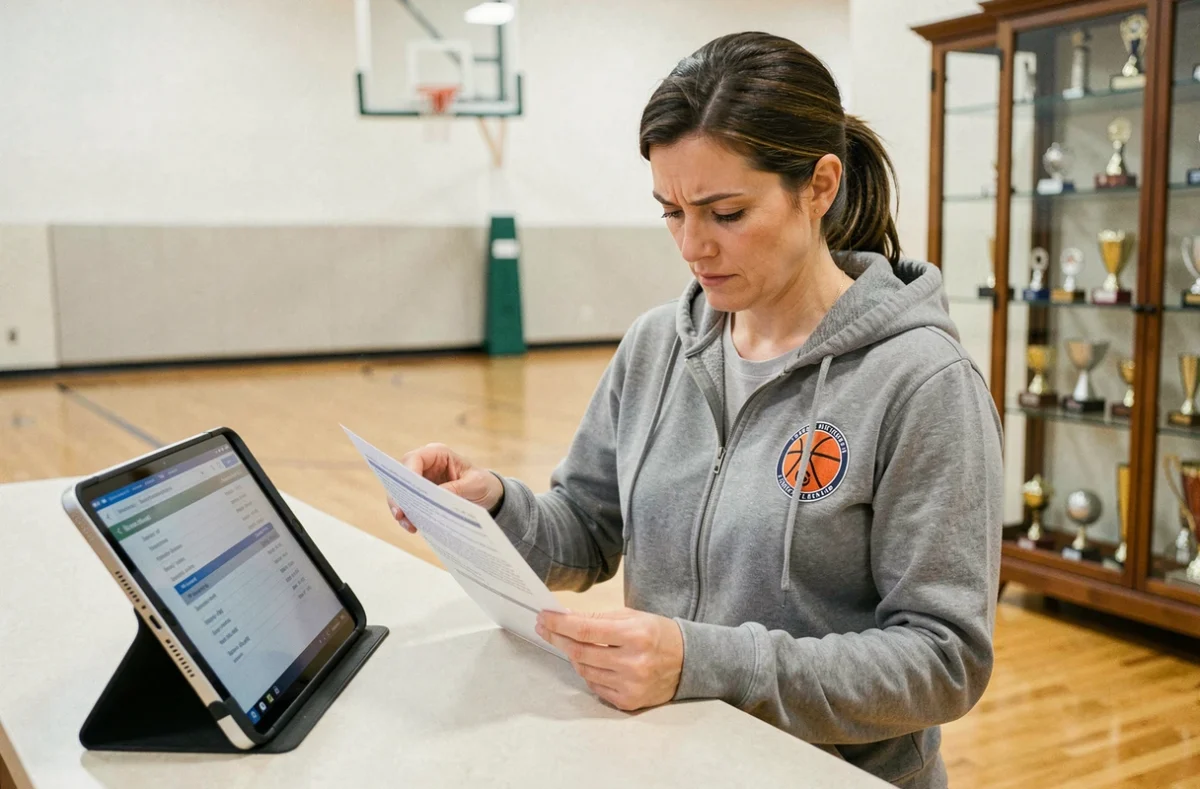
The licence is at the heart of club administration. A typo in a name, a transposed date of birth or an unattached medical certificate is enough to prevent approval. This is far from a rare occurrence.
Checking a player’s details before approving the application may seem obvious, but the rush at the start of the season leads many clubs to submit batches of licence applications without reviewing them. The problem only comes to light on game day, when the player doesn’t appear on the match sheet.
The pitfall of an unfinished licence application
FBI V2 uses several licence statuses: in progress, approved and awaiting documentation. A club may think a licence is active when it is still stuck at the “awaiting” stage. The most common cause is a missing document (proof of payment, medical certificate or health questionnaire) that was not uploaded correctly.
We recommend checking the status of every licence in the relevant tab at least one week before the first league game. Discovering an “awaiting” status on the eve of a game leaves no room to act.
Match sheets and results: entering data in FBI V2 without a hitch
Home clubs are required to enter game results in FBI V2. The classic mistake is confusing the role of FBI with that of e-Marque V2. FBI V2 is used to record the official result and manage administrative matters. e-Marque V2 is the electronic match-sheet tool used during the game.
A club that enters the score in e-Marque but forgets to finalise the result in FBI V2 ends up with a game that has not been approved by the committee. Meeting the result-entry deadline set by your committee is essential to avoid administrative complications.
Checking organisation details
Before even getting to results, FFBB how-to guides flag a frequently overlooked check: the “Organisation” tab, then “Your organisation” in FBI V2. The club’s contact details (registered address, contact person’s name and contact email address) must be up to date. An outdated email address means you won’t receive approval notifications or exemption alerts.
When a club elects a new board at its annual general meeting, updating these details in FBI V2 is often overlooked. Official letters then end up going to a former president, and follow-up messages get lost.
Referee training schools and club officials in FBI V2
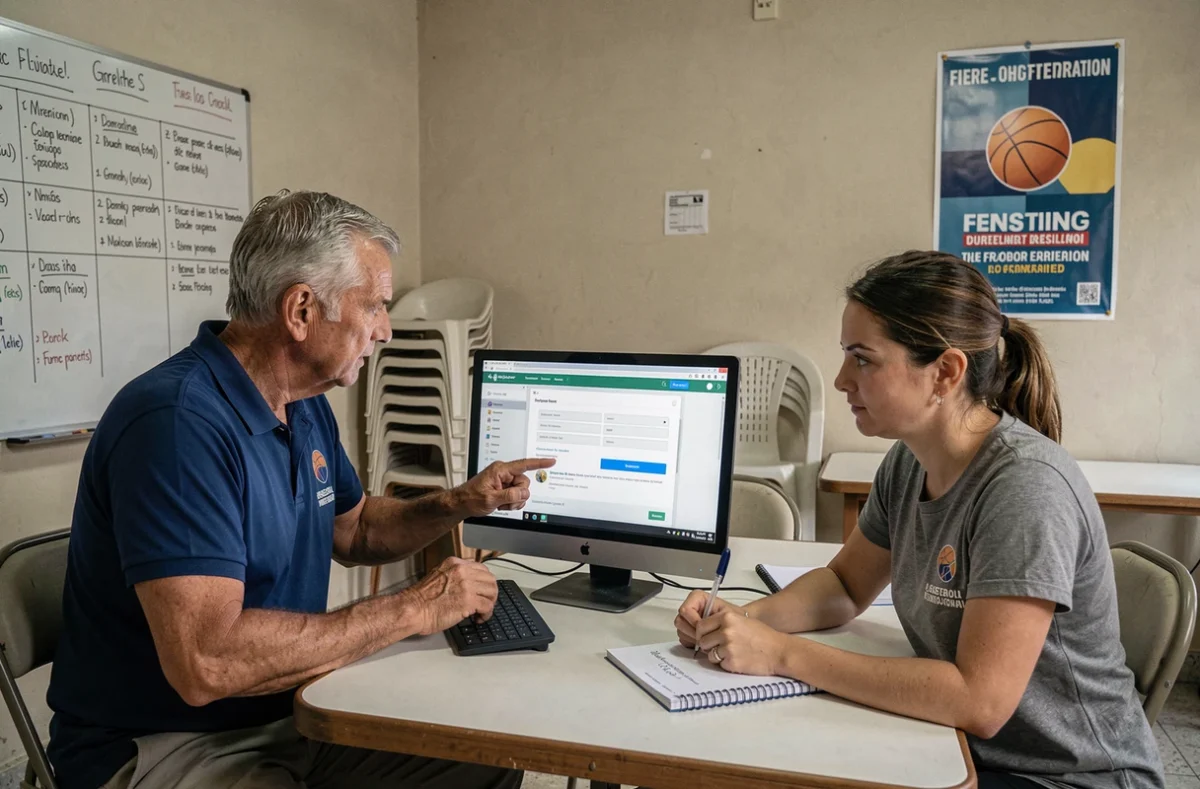
Managing referee training schools through FBI V2 remains a sticking point for many clubs. The FFBB requires clubs to declare their referee training school each year, enrol officials in training and enter completion certificates directly in the extranet.
The most common mistake is forgetting the annual declaration of the referee training school at the start of the season. Without this declaration, club officials in training cannot be registered for games, which means the club misses out on “Officials Charter” credits.
- Declare the referee training school in FBI V2 as soon as the season opens, without waiting for the first appointment.
- Enrol each official in training using accurate details (licence number and intended role: referee or table official).
- Enter the completion certificate as soon as the official finishes their training, so their status is up to date for subsequent games.
The FBI guide to referee training schools published by the FFBB explains every step, from logging in to registering officials for a game. For clubs new to this area, following the guide step by step prevents most administrative issues.
The FFBB support portal’s knowledge base remains the most reliable resource for resolving specific FBI V2 issues. Searching by topic in the knowledge base provides more precise answers than older tutorials shared on social media, some of which date back several years and no longer match the current interface.